About 297 minutes
"In the twinkling of an eye" — Context and Discussion
Science Fiction Utopias
68,114 recorded words. 21 minutes difference from this book's estimate.
View Gutenberg source #68722
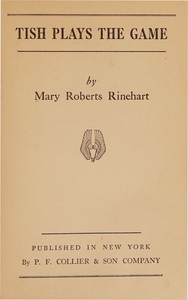
This digital edition of Tish plays the game — Reading Companion is described by source-level measurements including 63,304 words, 4 hr 36 min estimated reading time, and 11 detected text sections.
The text analysis averages about 15.3 words per sentence, while the detected sections provide another way to judge how the source is divided.
Project Gutenberg metadata also associates the work with “Humorous stories, American,” connecting these edition facts with the source record’s subject description.
Explore this collection
These alternatives are selected using recorded categories and estimated reading time.
About 297 minutes
Science Fiction Utopias
68,114 recorded words. 21 minutes difference from this book's estimate.
View Gutenberg source #68722About 254 minutes
Science Fiction Utopias
58,222 recorded words. 22 minutes difference from this book's estimate.
View Gutenberg source #75922About 310 minutes
Science Fiction Utopias
71,256 recorded words. 34 minutes difference from this book's estimate.
View Gutenberg source #75393Search stored excerpts and compare books → Choose by your preferences →
Choices use stored catalog measurements. Estimates vary with reading speed. A shared category is a catalog label, not a claim that two books have the same argument or literary quality.
Search reads excerpt text stored with this catalog and links to its associated Gutenberg record. The connection is stored in the site database; this tool does not recheck that every excerpt is word-for-word identical to that external record. Excerpt search does not cover every chapter and does not verify historical publication dates.
Catalog snapshot checked: 2026-09-25. Coverage: 95 public books, 95 available source excerpts.
Read the complete public-domain text at its original source.
Read on Project GutenbergThe story opens with the narrator, Lizzie, defending her friend Tish against accusations that a fruit jar buried in the floor was part of a still for making liquor. Tish's blackberry cordial, she insists, is a family recipe from Great-aunt Priscilla. This defensive tone sets up the pattern of Tish's well-intentioned schemes going awry.
Lizzie and Aggie, Tish's other close friend, are soon visited by Tish's nephew Charlie Sands, who suspects Tish is up to something. He reports she asked whether doubtful methods are justifiable for a righteous end. Lizzie dismisses his concerns, but the reader is primed for Tish's next crusade.
Lizzie describes the winter as quiet, with only occasional stiffness in Tish's arms attributed to neuritis. But Charlie Sands's visit reveals Tish's unusual quietness is a prelude to action. He warns that after every spell of quiet, she gets in the papers. The narrative voice, through Lizzie, maintains a surface of normalcy while hinting at impending chaos. The cordial and nut wafers served during the visit become recurring props, grounding the humor in domestic details.
When Tish and Lily May are supposedly abducted by rum-runners, Lizzie's panic contrasts with Charlie Sands's calm. He calculates the odds and predicts something will happen. The scene on the beach, with Lizzie feeding sea gulls as Tish did, shows how the friends' habits persist even in crisis. The revelation that Tish is at the helm of the revenue boat, having apparently subdued the crew, is typical of her resourcefulness. The detail of Tish straightening her bonnet before anchoring underscores her composure.
Aggie's ordeal—soaked, shot at by friends, and losing her teeth to a fish—is recounted with deadpan humor. Her dialogue, rendered with a stuffed-nose speech impediment, adds to the comedy. The scene where she sits on a case of liquor, insisting it's dried fish, highlights the absurdity. The lost teeth become a running gag, and her soft-food diet afterward emphasizes her suffering. This subplot shows how Tish's schemes affect even the most reluctant participant.
When the revenue boat appears with Tish at the helm, Charlie Sands's unease—'she's done away with them!'—is quickly dispelled. Tish's method of stopping the boat by dropping anchor with sails up shows her practical but unorthodox seamanship. The narrative leaves the fate of the original crew ambiguous, but the focus is on Tish's triumphant return. The scene reinforces the pattern: Tish's actions, however questionable, are always in service of a righteous end, as she sees it.
The excerpts offer a taste of Rinehart's comic voice: a narrator who defends her friend's motives while detailing the chaos that ensues. Readers should expect a series of escalating mishaps, each resolved by Tish's unflappable determination. The humor lies in the contrast between Lizzie's earnest account and the absurd events she describes. Approach the book as a lighthearted adventure with a strong ensemble dynamic.
The rain drummed on the window while Tish’s chaotic schooner chase unspooled, and I laughed at her fruit-jar “still.” Later, that same restless afternoon, I found myself drifting toward something quieter, heavier. The camaraderie in Tish’s whirlwind felt distant from the weary resignation in A farewell to arms — Context and Discussion, yet both lingered on how absurd plans unravel against stubborn realities.
Capture what you thought, learned, and would like to remember.