About 48 minutes
The cowboy and the lady and her pa — A Closer Reading
Science Fiction Utopias
11,038 recorded words. 8 minutes difference from this book's estimate.
View Gutenberg source #69929
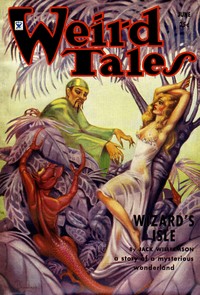
Before opening The haunter of the ring — Background and Themes, the edition data offers a quick orientation: 9,117 words, 40 min estimated reading time, and 1 detected text section.
The text analysis averages about 15.4 words per sentence, while the detected sections provide another way to judge how the source is divided.
Project Gutenberg metadata also associates the work with “Short stories,” connecting these edition facts with the source record’s subject description.
Explore this collection
These alternatives are selected using recorded categories and estimated reading time.
About 48 minutes
Science Fiction Utopias
11,038 recorded words. 8 minutes difference from this book's estimate.
View Gutenberg source #69929About 51 minutes
Science Fiction Utopias
11,697 recorded words. 11 minutes difference from this book's estimate.
View Gutenberg source #73243About 61 minutes
Science Fiction Utopias
13,823 recorded words. 21 minutes difference from this book's estimate.
View Gutenberg source #73065Search stored excerpts and compare books → Choose by your preferences →
Choices use stored catalog measurements. Estimates vary with reading speed. A shared category is a catalog label, not a claim that two books have the same argument or literary quality.
Search reads excerpt text stored with this catalog and links to its associated Gutenberg record. The connection is stored in the site database; this tool does not recheck that every excerpt is word-for-word identical to that external record. Excerpt search does not cover every chapter and does not verify historical publication dates.
Catalog snapshot checked: 2026-09-25. Coverage: 95 public books, 95 available source excerpts.
Read the complete public-domain text at its original source.
Read on Project GutenbergThe story opens with a collector brandishing an Afghan dagger, only to trigger a violent, inexplicable panic in a friend named Gordon. Howard immediately establishes a world where ordinary objects carry supernatural weight: the dagger's jeweled hilt provokes a strangled cry and a knocked-over chair, not reasoned fear. The narrator's bewilderment—"What in the——"—mirrors the reader's, while Gordon's recovery and muttered talk of a "black crime committed in a previous life" introduce the occult without explanation. This oblique approach, letting gesture and fragmentary confession carry the horror, is a hallmark of Howard's pulp technique.
Howard invests physical items with narrative force through precise, often visceral diction. The dagger is "jewel-hilted" and comes from "that robber Ahmed Mektub," a name that hints at exotic danger. Later, a ring is described as "ancient and accursed," but the text's power lies in how characters react to these objects: Gordon's "strangled cry" and "livid" countenance, or Evelyn Gordon's eyes that go "empty" before she cradles a bloody head. The author avoids abstract horror; instead, he lets a wine-glass overturned, a silk dressing-gown "worked with dragons," or a car "hurled recklessly through traffic" accumulate unease. Each object is a trigger for physical response, not a symbol to be decoded.
The narrator, O'Donnel, is a collector of weapons who admits being "too much engrossed in my own thoughts" to notice Gordon's haggard appearance. His voice is colloquial and blunt—"Is he drunk?"—which contrasts sharply with Kirowan's cultured restraint and Roelocke's sardonic calm. This range of registers creates a layered reality: O'Donnel's bewilderment keeps the supernatural at arm's length, while Kirowan's sudden shift to "primitive, elemental man" signals a break into occult knowledge. Howard uses the narrator's limited perspective to delay revelation; we learn only what O'Donnel sees and hears, making the final confrontation feel earned rather than explained.
The story's pacing is carefully calibrated. Early scenes are static—men in a study, brandy offered, a portrait mentioned—but each paragraph tightens the tension. Gordon's outburst is followed by a long, halting confession; then the action jumps to a shooting, a car chase, and a forced entry. Howard compresses time: "I wrenched the car to a grinding halt" and "the very elevator that shot us skyward seemed imbued with something of Kirowan's driving urge." The prose itself accelerates, with shorter sentences and fewer qualifiers. This structural shift from dialogue-heavy exposition to kinetic pursuit mirrors the transition from psychological horror to physical threat.
Howard's dialogue does double duty: it reveals character while withholding information. Gordon's fragmented speech—"Keep back! Get away from me, or——"—conveys terror without explaining its source. Kirowan's accusation, "You remember me, Yosef Vrolok!" drops a new name and a past history in a single line, but the reader must infer the relationship from context. Roelocke's laugh and shrug are a mask; his slip—"When did she kill him?"—is the only crack in his composure. The characters speak in short, charged exchanges, often interrupting each other. This staccato rhythm mimics the breathlessness of fear and keeps the occult lore embedded in human conflict rather than exposition.
Readers should attend to how Howard builds horror through physical detail and broken dialogue rather than lengthy descriptions of the supernatural. The ring itself is barely described; its power is shown through the characters' involuntary reactions—a strangled cry, a livid face, a slip of the tongue. This restraint, typical of Howard's best pulp work, rewards attention to gesture and pacing over plot mechanics. The story is best read quickly, as its momentum is part of its design.
That ring story stayed with me—that slow, creeping dread, how the fear builds in someone's chest before anything even happens. It reminded me of something in Tar and feathers — Background and Themes, the way both quietly let unease settle in without ever raising their voice. I keep thinking about that feeling long after turning the last page.
A brief reflection can help important ideas stay with you longer.