About 417 minutes
The Black Abbot — Story, Setting & Ideas
Science Fiction Utopias
95,875 recorded words. 5 minutes difference from this book's estimate.
View Gutenberg source #75643
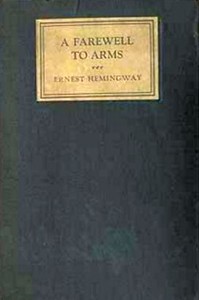
For A farewell to arms — Context and Discussion, the stored edition analysis reports 94,707 words, 6 hr 52 min estimated reading time, and 10 detected text sections.
The text analysis averages about 9.6 words per sentence, while the detected sections provide another way to judge how the source is divided.
Project Gutenberg metadata also associates the work with “World War, 1914-1918 -- Fiction,” connecting these edition facts with the source record’s subject description.
Explore this collection
These alternatives are selected using recorded categories and estimated reading time.
About 417 minutes
Science Fiction Utopias
95,875 recorded words. 5 minutes difference from this book's estimate.
View Gutenberg source #75643About 388 minutes
Science Fiction Utopias
89,171 recorded words. 24 minutes difference from this book's estimate.
View Gutenberg source #73731About 387 minutes
Science Fiction Utopias
88,952 recorded words. 25 minutes difference from this book's estimate.
View Gutenberg source #70634Search stored excerpts and compare books → Choose by your preferences →
Choices use stored catalog measurements. Estimates vary with reading speed. A shared category is a catalog label, not a claim that two books have the same argument or literary quality.
Search reads excerpt text stored with this catalog and links to its associated Gutenberg record. The connection is stored in the site database; this tool does not recheck that every excerpt is word-for-word identical to that external record. Excerpt search does not cover every chapter and does not verify historical publication dates.
Catalog snapshot checked: 2026-09-25. Coverage: 95 public books, 95 available source excerpts.
Read the complete public-domain text at its original source.
Read on Project GutenbergThe opening chapter establishes a landscape of dust, mud, and bare branches: troops march past a village house, artillery flashes at night, and the river runs clear over pebbles. Hemingway’s syntax—short clauses linked by and—creates a cumulative rhythm that mirrors the relentless movement of men and matériel. The description of soldiers marching “as though they were six months gone with child” under wet capes is one of several moments where the physical body becomes a site of strain and absurdity.
Throughout the excerpts, characters speak of illness and injury with a mixture of clinical detachment and dark humor. Rinaldi’s drunken monologue about syphilis—calling it “a simple industrial accident”—treats venereal disease as an occupational hazard of war. The priest’s presence during this exchange highlights a contrast between spiritual consolation and bodily decay. Later, the narrator observes Rinaldi’s “thin face was white” and his “eyes flat,” suggesting exhaustion that goes beyond physical fatigue. The major’s quiet interjection—“Or salvarsan”—grounds the conversation in actual medical practice of the era. These details resist the catalog subject “War wounds” as a generic category; instead, they show wounds as embedded in daily mess-hall talk, inseparable from the routines of eating, drinking, and sleeping.
The mess scene in Chapter XXV is built around food and alcohol: stew, black bread pudding with hard sauce, coffee, and brandy. The lamp smokes; candles replace it. Rinaldi’s outburst—“To hell with the whole damn business”—is punctuated by the orderly removing dishes. Hemingway uses the physical details of the meal—the gravy wiped up with bread, the “white meat” joke about Austrian officers—to anchor emotional volatility in concrete actions. The priest’s quiet responses and the major’s protective gestures create a social microcosm. This is not a grand battle scene but a cramped room where men eat and argue, and the war intrudes only through Rinaldi’s ravings and the major’s mention of an Austrian offensive. The catalog subject “World War, 1914-1918 — Medical care” finds its echo here not in hospital procedures but in the way men care for each other—or fail to—over a meal.
The opening chapter’s landscape is meticulously observed: the river’s pebbles “dry and white,” the chestnut forest where fighting “was not successful,” the vineyards “thin and bare-branched.” Hemingway repeats the word dust and wet to create a sensory record of decay. The mountains are “brown and bare”; the autumn leaves fall early. This is not a pastoral backdrop but an active participant: the weather dictates movement, the mud slows trucks, the mists obscure vision. The catalog subject “World War, 1914-1918 — Campaigns — Italy” is present only as a distant rumble—flashes on the mountain, troops passing—while the immediate focus stays on the physical environment. The narrator’s eye for detail—the “gray leather boxes” of cartridges, the “long barrels of the guns covered with green branches”—turns the landscape into a inventory of war’s material residue.
Readers approaching this novel through its catalog subjects may expect a straightforward war story or romance. The excerpts suggest a more oblique work, where the war is felt in the weight of wet capes and the taste of gravy, and where relationships are tested not in dramatic declarations but in the shared act of eating a meal. Pay attention to what is not said—the silences between Rinaldi’s rants, the priest’s withheld judgments, the narrator’s flat observations. Hemingway’s style rewards close reading of small gestures and repeated words.
Years among the stacks taught me that Hemingway’s weary soldiers, so numbed by absurdity and exhaustion, share a quiet kinship with Tish’s unshakeable composure. One meets chaos with terse resignation, the other with cheerful scheming, yet both find their own strange dignity in refusing to break. It is a gentle comfort, that echo. Tish plays the game — Reading Companion holds that same stubborn spark.
Your answers remain private and are stored only in this browser.