About 412 minutes
A farewell to arms — Context and Discussion
Science Fiction Utopias
94,707 recorded words. 5 minutes difference from this book's estimate.
View Gutenberg source #75201
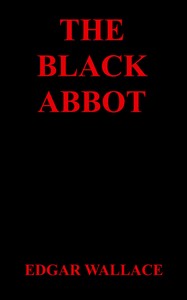
Before opening The Black Abbot — Story, Setting & Ideas, the edition data offers a quick orientation: 95,875 words, 6 hr 57 min estimated reading time, and 9 detected text sections.
The text analysis averages about 13.6 words per sentence, while the detected sections provide another way to judge how the source is divided.
Project Gutenberg metadata also associates the work with “Detective and mystery stories,” connecting these edition facts with the source record’s subject description.
Explore this collection
These alternatives are selected using recorded categories and estimated reading time.
About 412 minutes
Science Fiction Utopias
94,707 recorded words. 5 minutes difference from this book's estimate.
View Gutenberg source #75201About 388 minutes
Science Fiction Utopias
89,171 recorded words. 29 minutes difference from this book's estimate.
View Gutenberg source #73731About 387 minutes
Science Fiction Utopias
88,952 recorded words. 30 minutes difference from this book's estimate.
View Gutenberg source #70634Search stored excerpts and compare books → Choose by your preferences →
Choices use stored catalog measurements. Estimates vary with reading speed. A shared category is a catalog label, not a claim that two books have the same argument or literary quality.
Search reads excerpt text stored with this catalog and links to its associated Gutenberg record. The connection is stored in the site database; this tool does not recheck that every excerpt is word-for-word identical to that external record. Excerpt search does not cover every chapter and does not verify historical publication dates.
Catalog snapshot checked: 2026-09-25. Coverage: 95 public books, 95 available source excerpts.
Read the complete public-domain text at its original source.
Read on Project GutenbergFrom its first scene, The Black Abbot establishes a world where domestic routine is shadowed by secrecy and surveillance. The eighteenth Earl of Chelford, Harry Alford, sorts treasury notes from a battered steel box while a footman lingers, overheard conversations hinting at hidden knowledge. The library, with its gallery and circular iron staircase, becomes a stage for whispered instructions and unspoken threats. Wallace builds tension through small, precise details: the gray envelope addressed to Leipzig, the portrait of a tragic mother, the footman's powdered hair. These elements ground the supernatural legend of the Black Abbot in a very material world of money, letters, and family history.
The physical spaces in the excerpts are never neutral. The library is described as a "high-roofed building" with a gallery running round three sides, reached by a circular iron staircase—a design that allows for unseen observers and sudden appearances. The portrait of Lady Chelford, a "wild-eyed beauty," dominates the fireplace, linking the present Earl to a past tragedy. Later, the narrative moves to the grounds: the drive, the lodge gates, the bend of the road. Characters are watched from windows, their movements tracked by cigar glows in the dark. Wallace uses architecture and landscape to create a sense of constant, layered observation. The manor is not just a setting but an active participant in the mystery, its nooks and sightlines enabling both surveillance and concealment.
Recurring visual motifs of light and darkness punctuate the excerpts. The Earl's study is lit by daylight, yet the narrative dwells on shadows and glows. Richard Alford is identified by the "little red glow" of his cigar in the dark, a detail that transforms a casual observation into evidence of his nocturnal patrols. Leslie, the heroine, is seen "in that bright, sunlit world" but makes her decisions at night. The Black Abbot himself is never seen clearly—only "a terrified gamekeeper" reports him. Wallace uses these contrasts to blur the line between the rational and the spectral. The treasure, too, is associated with darkness: it is hidden, its location unknown, its pursuit conducted in secret. Light does not always bring clarity; it often reveals only that something—or someone—is watching.
The excerpts show a deliberate rhythm of scene changes. The story opens in the library, then shifts to the grounds, then to Willow House, and back to the road. Each transition is marked by a character's movement: Richard Alford rides away, Leslie walks home, Thomas appears at the gate. These movements are not merely functional; they carry emotional weight. Leslie's walk home is described in detail—she sees Thomas from a distance, hesitates, then turns away. The narrative lingers on her decision-making, the "long thought and heart-searching" that led to a "momentous decision" we are not yet told. Wallace uses these interstitial moments to build suspense, letting the reader inhabit the character's uncertainty. The landscape itself becomes a series of thresholds: the gate, the bend in the road, the door of Willow House.
Wallace's dialogue is economical but loaded. A single line—"I could tell you something that would be worth a lot to you"—carries the threat of revelation. The ex-footman Thomas, described as "ludicrously like a nodding mandarin," speaks in fragments: "People talk about the Chelford treasure——" The dash is a deliberate gap, a withheld secret. Similarly, Richard Alford's warning to Leslie—"there may be real danger for the next day or two"—is left unexplained. The narrative trusts the reader to feel the weight of these omissions. The treasure is mentioned but not described; the Black Abbot's legend is referenced but not narrated. Wallace creates a world where information is parceled out stingily, and every half-spoken sentence becomes a clue.
Readers attentive to the interplay of setting and gesture will find The Black Abbot a tightly wound puzzle. The excerpts offer no resolution, only a series of carefully placed threads: the Leipzig address, the discharged footman, the treasure that everyone seems to know about but no one explains. The novel rewards those who watch for small details—the color of an envelope, the position of a cigar end, the timing of a light going out. These are the real clues, not the ghost.
Rereading The Black Abbot reminded me of those long evenings in the library at Fossaway, where every shadow seemed to hold a secret. That particular atmosphere—of wondering which version of a story to believe—kept nudging me toward Was I right? — Inside the Classic. It’s a quieter kind of companion, more about the questions than the answers, and I found myself setting one book down to pick up the other.
Build a private reading journal entry for this title.