About 297 minutes
"In the twinkling of an eye" — Context and Discussion
Science Fiction Utopias
68,114 recorded words. 13 minutes difference from this book's estimate.
View Gutenberg source #68722
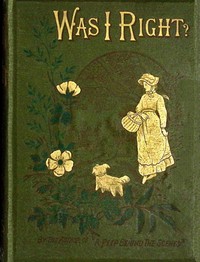
The source record for Was I right? — Inside the Classic measures this digital text at 71,256 words, 5 hr 10 min estimated reading time, and 8 detected text sections.
The text analysis averages about 19.6 words per sentence, while the detected sections provide another way to judge how the source is divided.
Project Gutenberg metadata also associates the work with “Christian life -- Fiction,” connecting these edition facts with the source record’s subject description.
Explore this collection
These alternatives are selected using recorded categories and estimated reading time.
About 297 minutes
Science Fiction Utopias
68,114 recorded words. 13 minutes difference from this book's estimate.
View Gutenberg source #68722About 276 minutes
Science Fiction Utopias
63,304 recorded words. 34 minutes difference from this book's estimate.
View Gutenberg source #70942About 254 minutes
Science Fiction Utopias
58,222 recorded words. 56 minutes difference from this book's estimate.
View Gutenberg source #75922Search stored excerpts and compare books → Choose by your preferences →
Choices use stored catalog measurements. Estimates vary with reading speed. A shared category is a catalog label, not a claim that two books have the same argument or literary quality.
Search reads excerpt text stored with this catalog and links to its associated Gutenberg record. The connection is stored in the site database; this tool does not recheck that every excerpt is word-for-word identical to that external record. Excerpt search does not cover every chapter and does not verify historical publication dates.
Catalog snapshot checked: 2026-09-25. Coverage: 95 public books, 95 available source excerpts.
Read the complete public-domain text at its original source.
Read on Project GutenbergThe novel opens with May, a nineteen-year-old, recalling a pivotal day when she sat at her bedroom window, acutely aware of every detail in the garden—the laurel hedge, the elm trees, the rabbits on the lawn. This sharp sensory memory frames her story of sudden poverty after her father's death and bank failure. Left with her younger half-sister Maggie, May must choose a path forward. The narrative voice is introspective, often questioning past decisions, as the title suggests. The early chapters establish a pattern of moral deliberation, where small objects and settings carry emotional weight.
May’s sense of responsibility is established early: at age seven, she felt a “great responsibility and trust” after her stepmother’s death, vowing to be a mother to Maggie. This promise shapes her choices. The text repeatedly returns to the idea of binding commitments—whether to family, to God, or to oneself. When Evelyn later confesses she read a tract about the prodigal son, the conversation centers on the order of prayer: asking forgiveness before making requests. May insists, “we must speak to God about our sins, before we can speak to Him about our troubles.” This hierarchy of spiritual duty mirrors May’s own prioritization of Maggie’s welfare over her own desires.
Evelyn’s struggle to pray is a key episode. She admits, “I wish I could do the other thing,” referring to prayer. May sees this as an “opportunity” to guide her. The dialogue is careful and didactic, with May explaining the prodigal son parable: asking for a coat or shoes before seeking forgiveness would be wrong. Evelyn’s self-awareness grows: “I never know till now how bad I had been to Him.” The scene is structured as a spiritual tutorial, with May praying for the right words. The novel uses such intimate conversations to dramatize internal conflicts about faith and worthiness, making prayer a tangible act of connection.
The opening description of the garden—laurel bushes, elm trees, a stream where May and her siblings once floated boats—is not mere nostalgia. It anchors May’s memory of loss and choice. The “quaint, old-fashioned garden” contrasts with the poverty that forces her to leave. Later, the journey to Jerusalem (indicated in chapter titles) suggests a physical movement that parallels spiritual seeking. The text uses specific, concrete details—a bundle of tracts left on a table, the three crosses on Calvary—to ground abstract moral questions. These settings are not backdrops but active elements in May’s reckoning with right and wrong.
Readers attentive to the novel’s title will find that every chapter builds toward a verdict on May’s choices. The excerpts show a pattern of weighing promises against circumstances, and of spiritual counsel offered in moments of vulnerability. Pay particular attention to how the narrator’s retrospective tone colors the account—what she remembers, and what she questions, reveals as much as the events themselves.
Reading Was I Right? — Inside the Classic, I kept thinking of May’s quiet struggle between what she owed her sister and what she owed herself, and it reminded me of another story—Too much progress for Piperock — Context and Discussion—where progress also asks that kind of personal price. Both feel like old friends telling me something I already half-knew.
Save your reaction, strongest insight, and memorable passage.