About 276 minutes
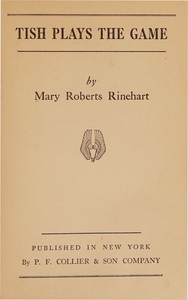
Tish plays the game — Reading Companion
Science Fiction Utopias
63,304 recorded words. 22 minutes difference from this book's estimate.
View Gutenberg source #70942
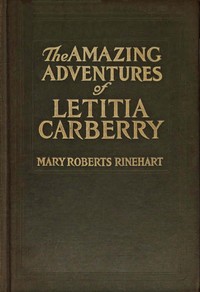
The source record for The amazing adventures of Letitia Carberry — Story, Setting & Ideas measures this digital text at 58,222 words, 4 hr 14 min estimated reading time, and 34 detected text sections.
The text analysis averages about 14.8 words per sentence, while the detected sections provide another way to judge how the source is divided.
Project Gutenberg metadata also associates the work with “Humorous stories, American,” connecting these edition facts with the source record’s subject description.
Explore this collection
These alternatives are selected using recorded categories and estimated reading time.
About 276 minutes
Science Fiction Utopias
63,304 recorded words. 22 minutes difference from this book's estimate.
View Gutenberg source #70942About 297 minutes
Science Fiction Utopias
68,114 recorded words. 43 minutes difference from this book's estimate.
View Gutenberg source #68722About 310 minutes
Science Fiction Utopias
71,256 recorded words. 56 minutes difference from this book's estimate.
View Gutenberg source #75393Search stored excerpts and compare books → Choose by your preferences →
Choices use stored catalog measurements. Estimates vary with reading speed. A shared category is a catalog label, not a claim that two books have the same argument or literary quality.
Search reads excerpt text stored with this catalog and links to its associated Gutenberg record. The connection is stored in the site database; this tool does not recheck that every excerpt is word-for-word identical to that external record. Excerpt search does not cover every chapter and does not verify historical publication dates.
Catalog snapshot checked: 2026-09-25. Coverage: 95 public books, 95 available source excerpts.
Read the complete public-domain text at its original source.
Read on Project GutenbergThe story opens not with a crime but with a thrown clock. Tish Carberry, laid up in a hospital rest cure after a car accident, hurls her small traveling clock at her sleeping nurse, Miss Lewis, to wake her. The nurse picks it off her chest and asks, “Would you like some buttermilk?” This deadpan exchange sets the tone for a narrative that treats chaos with matter-of-fact humor. Tish’s voice—practical, tart, and unflappable—dominates the telling, even though she is ostensibly the patient. The hospital, we learn, has become “demoralized,” and Tish, as a member of the Ladies’ Committee, feels responsible. The mystery begins with a scream outside her room, followed by short, sharp cries and running footsteps. But Tish’s first thought is not danger; it is annoyance at the woman across the hall who had her appendix removed and “had been very unpleasant as a neighbor.”
Tish Carberry is not a typical invalid. She is in the hospital for a rest cure and a twisted knee—the knee injured when she was thrown from her second-hand automobile over the steering wheel and “ten feet beyond the potato wagon she had collided with.” The narrator, presumably her friend Aggie, notes that Tish “brought up standing on her head in three inches of muddy water.” This physical comedy is characteristic: Tish’s mishaps are recounted with precise, almost clinical detail, yet the tone remains wry. Even in bed, Tish is the one taking charge. She throws a clock to rouse her nurse, she insists on investigating the commotion, and she later conducts her own detective work, interviewing staff and collecting evidence. The narrative voice consistently undercuts any sentimentality. When Miss Lewis offers buttermilk at 1:20 a.m., the absurdity of the suggestion is left hanging. Tish’s authority comes not from her official role but from her refusal to be passive. She is, as the text says, “not really ill”—she is simply someone who cannot stop acting.
The setting is a hospital, but it functions less as a place of healing than as a stage for farcical misadventures. The mystery involves a body tied to a chandelier with a towel marked “S. P. T.”—which Tish learns stands for “Sick Patient Towel,” used for tying up delirious patients. The clue is both practical and absurd. The investigation leads Tish to the zoo, where an ape named Hero is supposed to have committed suicide with a roller towel from the Dunkirk hospital. Tish’s reaction is characteristically blunt: “when he hangs himself with a roller towel from the Dunkirk hospital, I want to know how he got that towel.” The hospital is a place of locked doors, basement entrances, and night nurses with “darkish bundles.” Yet the tone never tips into grimness. Even the Chief of Police is drawn into the comedy, responding with “Oho!” when he thinks the ape got loose. The tension between the macabre events and the characters’ mundane reactions—Aggie lying on a couch with a cubeb cigarette, staring “with admiration mixed with awe”—creates a distinctive comic rhythm.
Tish’s detective method is methodical but homespun. She takes notes, interviews staff, and cross-references details. The key figure is Wesley Barker, a keeper at the zoo who was crushed by the ape Hero and later became a patient at the hospital. He was dismissed three days before the body was found. Tish deduces that if Barker was out of the hospital, he could hardly get back in without “using dynamite.” Yet the towel connects the two locations. The narrative presents the investigation as a series of logical steps, but the logic is constantly undercut by the absurdity of the evidence. Tish’s notes include observations about day nurses Miss Blake and Miss Linda Smith, who coaxed a night nurse to the basement where patients’ clothes are kept. The “darkish bundle” one nurse carried hints at a conspiracy, but the text leaves the resolution to the reader. The excerpts do not reveal the full solution, only Tish’s confident unraveling. What is clear is that the mystery is solved not through official channels but through Tish’s stubborn refusal to accept the obvious explanation—that a lonely monkey committed suicide.
Readers should pay close attention to the way Rinehart uses the narrator’s voice to filter events. The story is told by Aggie, who is both awestruck and amused by Tish. This double perspective—Tish’s actions seen through Aggie’s eyes—creates a layered comedy. The excerpts suggest that the plot hinges on small, overlooked details: a towel’s label, a dismissed employee, a bundle of clothes. The humor lies not in the absurdity of the events alone but in the characters’ unflappable responses to them. Tish’s broken arm, acquired when she jumps from an elevator cage to avoid a falling dead rabbit, is treated as a minor inconvenience. The tone is consistently dry, and the mystery is as much about character as about plot.
There’s a quiet mischief in Tish’s crankcase adventures, that odd mix of danger and dignity. It reminds me, privately, of another small town’s stubborn soul—Piperock’s own peculiar pride. Both stories hum with the same engine: ordinary folks, improbable fixes, and the gentle chaos they leave behind. Too much progress for Piperock — Context and Discussion keeps that same fond, wry company, like two old friends nodding across a library table.
Answer a few questions and save a private reflection on this device.