About 262 minutes
Knock three-one-two — Inside the Classic
Fantasy Juvenile Worlds
60,226 recorded words. 56 minutes difference from this book's estimate.
View Gutenberg source #70944
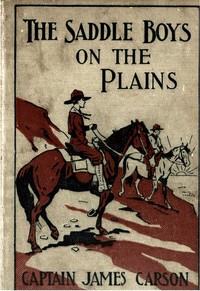
For The saddle boys on the plains — Inside the Classic, the stored edition analysis reports 47,177 words, 3 hr 26 min estimated reading time, and 27 detected text sections.
The text analysis averages about 17.1 words per sentence, while the detected sections provide another way to judge how the source is divided.
Project Gutenberg metadata also associates the work with “Western stories,” connecting these edition facts with the source record’s subject description.
Explore this collection
These alternatives are selected using recorded categories and estimated reading time.
About 262 minutes
Fantasy Juvenile Worlds
60,226 recorded words. 56 minutes difference from this book's estimate.
View Gutenberg source #70944About 301 minutes
Fantasy Juvenile Worlds
69,184 recorded words. 95 minutes difference from this book's estimate.
View Gutenberg source #73207About 82 minutes
Fantasy Juvenile Worlds
18,645 recorded words. 124 minutes difference from this book's estimate.
View Gutenberg source #75817Search stored excerpts and compare books → Choose by your preferences →
Choices use stored catalog measurements. Estimates vary with reading speed. A shared category is a catalog label, not a claim that two books have the same argument or literary quality.
Search reads excerpt text stored with this catalog and links to its associated Gutenberg record. The connection is stored in the site database; this tool does not recheck that every excerpt is word-for-word identical to that external record. Excerpt search does not cover every chapter and does not verify historical publication dates.
Catalog snapshot checked: 2026-09-25. Coverage: 95 public books, 95 available source excerpts.
Read the complete public-domain text at its original source.
Read on Project GutenbergThe Saddle Boys on the Plains opens with Frank and Bob riding away from Circle Ranch, their departure marked by cowboy salutes and a father's trust in his son's judgment. The story quickly establishes a pattern of observation and inference: Frank notes that a man carrying 130 pounds of gold would sink deeper into soft ground than one carrying half that weight—a detail that shifts the tracking strategy. This attention to physical evidence, rather than mere action, sets the tone for a narrative where the landscape itself becomes a source of clues.
The excerpts reveal a story built on careful reasoning from physical signs. When Frank and his companions discover two sets of tracks—one old, one fresh—Frank uses the depth of footprints to argue that the thieves may have hidden the gold. This moment, where a boy's logic overrides the assumptions of older men, recurs throughout. Sim Garrison, the experienced trailer, reads the ground with practiced ease, but Frank's questions often redirect the pursuit. The text presents deduction as a collaborative process: Sim's tracking skill and Frank's analytical questions together drive the chase forward.
The narrative also emphasizes the importance of small details. A chance crossing of old and new trails saves the party from following a longer route, and Frank's observation of a moving horse through a gap triggers the final pursuit. These moments suggest that success depends on noticing what others might overlook.
The dialogue in the excerpts is brisk and functional, often carrying exposition within conversational exchanges. Characters speak in short, direct sentences: “So-long, boys!” and “Ready, Bob? Then we’re off!” The speech of Frank and Bob is more deliberate than that of the cowboys, who use contractions and colloquialisms like “fellers” and “a-hangin’.” This contrast marks the boys as outsiders to the ranch life, though they are accepted participants.
Questions drive the conversation. Bob asks for explanations; Frank poses hypotheticals to test theories. The exchange about the gold sacks—where Frank walks Riley through the weight logic—shows how dialogue serves as a tool for collaborative problem-solving. The rhythm of call-and-response, with one character stating a fact and another challenging it, creates a sense of active investigation.
The Arizona plains are not merely a backdrop but an active force in the story. The text references specific features: the “slight rise of the prairie,” the “soft ground” that records footprints, the “little gap” through which a horse is glimpsed. These details ground the action in a tangible environment. The threat of a prairie fire, listed in the table of contents, suggests that the landscape can turn hostile.
The characters move through this space with purpose, their horses setting a pace that matches the urgency of the chase. The trailer Sim Garrison runs alongside his horse, reading signs invisible to a “greenhorn like Bob.” This emphasis on skilled movement through terrain—knowing where to look, how fast to go—makes the setting a participant in the plot rather than a passive stage.
Readers will find that the book rewards attention to small details: a footprint’s depth, a horse’s movement, a chance crossing of trails. The story does not rely on sudden revelations but on the steady accumulation of observed facts. The excerpts suggest that the pleasure lies less in the destination—the treasure—than in the process of reading the land and the people who cross it.
There’s a particular tenderness in watching Frank and Bob read the Arizona dust, every scarred trail a sentence. I often think of that careful, anxious reading when I recall The trail of the serpent — Reading Notes. Both books understand that the land keeps its own ledger, and wisdom is simply learning to listen before you move.
Create a short personal record of your experience with this book.