About 37 minutes
The strike at Too Dry — Edition Insights
Fantasy Juvenile Worlds
8,313 recorded words. 6 minutes difference from this book's estimate.
View Gutenberg source #74140
Before opening Skulls in the stars — Inside the Classic, the edition data offers a quick orientation: 7,045 words, 31 min estimated reading time, and 1 detected text section.
The text analysis averages about 20.2 words per sentence, while the detected sections provide another way to judge how the source is divided.
Project Gutenberg metadata also associates the work with “Fantasy fiction,” connecting these edition facts with the source record’s subject description.
Explore this collection
These alternatives are selected using recorded categories and estimated reading time.
About 37 minutes
Fantasy Juvenile Worlds
8,313 recorded words. 6 minutes difference from this book's estimate.
View Gutenberg source #74140About 39 minutes
Fantasy Juvenile Worlds
8,758 recorded words. 8 minutes difference from this book's estimate.
View Gutenberg source #68930About 61 minutes
Fantasy Juvenile Worlds
13,964 recorded words. 30 minutes difference from this book's estimate.
View Gutenberg source #70570Search stored excerpts and compare books → Choose by your preferences →
Choices use stored catalog measurements. Estimates vary with reading speed. A shared category is a catalog label, not a claim that two books have the same argument or literary quality.
Search reads excerpt text stored with this catalog and links to its associated Gutenberg record. The connection is stored in the site database; this tool does not recheck that every excerpt is word-for-word identical to that external record. Excerpt search does not cover every chapter and does not verify historical publication dates.
Catalog snapshot checked: 2026-09-25. Coverage: 95 public books, 95 available source excerpts.
Read the complete public-domain text at its original source.
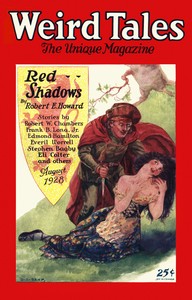
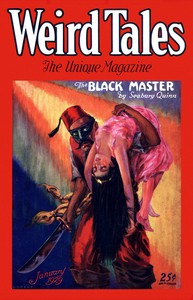
Read on Project GutenbergThe catalog subjects for this 1929 Weird Tales story list “Puritans” and “Good and evil,” but the excerpts show a more specific moral landscape. Solomon Kane, a gaunt Puritan wanderer, is warned off a moor road and later confronts a ghost that kills indiscriminately. The tale’s horror hinges not on a generic battle of good versus evil, but on a precise supernatural logic: the ghost of a murdered maniac cannot distinguish its killer from other men, so it slays all who cross the moor. Kane’s solution is to bind the murderer to a tree at sunset, leaving him to be torn apart by the ghost he created.
The story opens with a stark geographical choice: two roads to Torkertown. The shorter moor road is “accurst”; the longer swamp road is dangerous with quagmires but passes the house of old Ezra. The villagers send a boy to beg Kane to take the swamp road, but they will not say why. This withholding of information creates a tension that the catalog subject “England — Fiction” does not capture. The moor is not just a setting but an active threat, described as a place where “no one ever goes.” The swamp road, though longer, offers human shelter—yet that shelter belongs to Ezra, who will later be revealed as the murderer. The roads thus encode a moral choice: direct danger versus indirect complicity.
Kane learns the ghost’s rules from its own “yammerings and whisperings.” The spirit of Gideon, a maniac murdered by his cousin Ezra, cannot distinguish one man from another. It “slays all, lest he let his killer escape.” This is not a generic haunting but a specific supernatural mechanism: hate has made the ghost “a solid thing that can rend and slay,” yet it remains cognitively blind. Kane explains that the ghost “will know you and rest in peace forever after” only when it kills Ezra. This logic drives the plot: Kane must deliver Ezra to the ghost, not kill him himself. The story thus explores a kind of spectral justice, where the living act as agents of a dead man’s vengeance.
After binding Ezra to the tree, Kane does not celebrate. He says, “A hard thing it is … to sentence a man to death in cold blood,” and later sighs, “My heart is heavy within me.” When a villager assures him he has done “the will of God,” Kane replies, “I know not—I know not.” This uncertainty complicates the catalog subject “Good and evil.” Kane acts as judge and executioner, but he questions his own righteousness. The story ends with a grim silhouette against the moon—the murderer fleeing, the ghost pursuing—and Kane’s doubt lingers. The tale offers no clear moral resolution, only a haunting image and a Puritan’s troubled conscience.
Readers should attend to how the story builds its horror through specific, rule-bound supernatural phenomena rather than vague menace. The ghost’s inability to identify its killer is a key plot device, not a mere atmospheric detail. Kane’s final doubt also rewards attention: it suggests that the story is less about righteous punishment than about the weight of deciding who deserves to die. The excerpts do not reveal whether the ghost actually kills Ezra, but the narrative structure points toward that conclusion.
That afternoon, the rain tapping like a tedious judge while I followed Kane’s spectral justice, I noticed the margin note about moral sentencing—and found myself reaching for The Bellamy trial — Reading Notes almost without deciding to. The same cold, precise logic of punishment, but no moor fog to hide in. Just ordinary rooms, ordinary voices, deciding what a life costs.
Answer a few questions and save a private reflection on this device.