About 80 minutes
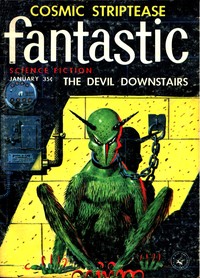
The devil downstairs — Context and Discussion
Fantasy Juvenile Worlds
18,365 recorded words. 19 minutes difference from this book's estimate.
View Gutenberg source #73703
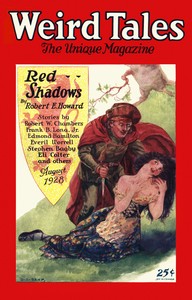
For Red shadows — Edition Insights, the stored edition analysis reports 13,964 words, 1 hr 1 min estimated reading time, and 2 detected text sections.
The text analysis averages about 17.8 words per sentence, while the detected sections provide another way to judge how the source is divided.
Project Gutenberg metadata also associates the work with “Africa -- Fiction,” connecting these edition facts with the source record’s subject description.
Explore this collection
These alternatives are selected using recorded categories and estimated reading time.
About 80 minutes
Fantasy Juvenile Worlds
18,365 recorded words. 19 minutes difference from this book's estimate.
View Gutenberg source #73703About 82 minutes
Fantasy Juvenile Worlds
18,645 recorded words. 21 minutes difference from this book's estimate.
View Gutenberg source #75817About 39 minutes
Fantasy Juvenile Worlds
8,758 recorded words. 22 minutes difference from this book's estimate.
View Gutenberg source #68930Search stored excerpts and compare books → Choose by your preferences →
Choices use stored catalog measurements. Estimates vary with reading speed. A shared category is a catalog label, not a claim that two books have the same argument or literary quality.
Search reads excerpt text stored with this catalog and links to its associated Gutenberg record. The connection is stored in the site database; this tool does not recheck that every excerpt is word-for-word identical to that external record. Excerpt search does not cover every chapter and does not verify historical publication dates.
Catalog snapshot checked: 2026-09-25. Coverage: 95 public books, 95 available source excerpts.
Read the complete public-domain text at its original source.
Read on Project GutenbergThe story opens with Solomon Kane discovering a dying girl in a moonlit forest, her last words naming her attacker: Le Loup, the Wolf. Kane’s response is notably restrained—no oaths, no grand declarations—only a cold statement: “Men shall die for this.” This understated reaction sets the tone for a protagonist whose vengeance is methodical rather than passionate. The narrative quickly shifts to Le Loup’s camp, where the villain’s cruelty is established through dialogue and action, not exposition. Howard’s prose is lean, favoring concrete details—the scent of smoke, the glint of a rapier—over abstract description.
Solomon Kane is introduced as a “landless man” and a wanderer, yet his speech and bearing mark him as distinct from the lawless environment he moves through. When he speaks to the dying girl, his voice is “soft, soothing, as one speaks to a babe,” a gentleness that contrasts sharply with the violence he is about to unleash. Howard emphasizes Kane’s otherness through his clothing and weaponry—a rapier rather than a cutlass—and his refusal to swear oaths or make reckless vows. This restraint makes his eventual brutality more striking. The Puritan ethic is not overtly preached but is visible in Kane’s actions: he does not seek reward or glory, only the punishment of evil. The African sections of the story introduce a different kind of otherness, as Kane confronts cultures and supernatural forces that challenge his worldview. The ju-ju man N’Longa, who dies and is resurrected, embodies a power that Kane cannot fully explain but must accept.
Le Loup, the antagonist, is characterized by his cruelty and his hold over his men. In the camp scene, he berates a follower as a “fool” and a “dolt,” his words delivered in a “cold snarl that curdled the hearer’s blood.” Howard gives Le Loup a predatory physicality: “supple as a leopard and with a lean, cruel, predatory face.” His eyes “danced and glittered with a kind of reckless mockery.” This description aligns him with the animal his name suggests—a wolf, cunning and remorseless. The dynamic between Le Loup and his men is one of fear and dominance, not loyalty. When Kane begins his pursuit, the men’s terror of the “demon from hell” undermines Le Loup’s authority. The villain’s eventual flight from the supernatural horror—the walking corpse—reveals that his courage is only for human foes. The story uses Le Loup as a foil to Kane: both are killers, but Kane’s violence is disciplined and purposeful, while Le Loup’s is chaotic and self-serving.
The climax of the story hinges on a supernatural event: a dead man rises and walks toward the throne of the king Songa. Howard describes the scene with precise, eerie detail: the corpse moves with “stiff, jerky and automatonlike steps,” its arms “flung out grotesquely as if in balance.” The reaction of the worshippers is one of “terror-fascinated” paralysis. The spear that tears through the dead man’s breast does not halt it, because “the dead die not.” This moment is the story’s pivot: human violence fails, but supernatural vengeance succeeds. The ju-ju man N’Longa, who had been killed, later opens his eyes and grins, suggesting that his spirit or power animated the corpse. Howard does not explain the mechanism; he presents it as an inexplicable event that Kane witnesses but does not fully comprehend. The story thus moves from a historical adventure into the realm of weird fiction, where the laws of nature can be suspended to serve a moral purpose. The final image of the idol’s “great, inhuman eyes” staring with “terrible, still laughter” reinforces the sense that forces beyond human understanding are at work.
Readers should note that the excerpts provided cover only the opening and closing sections of the story; the middle portion, including Kane’s journey through Africa and his encounter with N’Longa, is not included. The narrative’s shift from a European setting to an African one introduces new characters and supernatural elements that are only hinted at in the available text. Pay attention to how Howard balances Kane’s Puritan rationality with the inexplicable events he encounters, and how the theme of vengeance is complicated by forces beyond human control.
I keep thinking about how Solomon Kane’s rigid world cracks open when he crosses into Africa, that neat revenge turning strange and haunted. The small bachelor — Background and Themes lingered with me the same way, not for darkness, but for how quietly it lets a life shift beneath its own assumptions. Sometimes a story just stays, like a half-remembered room.
Your answers remain private and are stored only in this browser.