About 428 minutes
Cole of Spyglass Mountain — A Closer Reading
Fantasy Juvenile Worlds
98,307 recorded words. 76 minutes difference from this book's estimate.
View Gutenberg source #74690
For The Bellamy trial — Reading Notes, the stored edition analysis reports 115,696 words, 8 hr 24 min estimated reading time, and 13 detected text sections.
The text analysis averages about 14.8 words per sentence, while the detected sections provide another way to judge how the source is divided.
Project Gutenberg metadata also associates the work with “Adultery -- Fiction,” connecting these edition facts with the source record’s subject description.
Explore this collection
These alternatives are selected using recorded categories and estimated reading time.
About 428 minutes
Fantasy Juvenile Worlds
98,307 recorded words. 76 minutes difference from this book's estimate.
View Gutenberg source #74690About 375 minutes
Fantasy Juvenile Worlds
86,202 recorded words. 129 minutes difference from this book's estimate.
View Gutenberg source #75384About 673 minutes
Fantasy Juvenile Worlds
154,693 recorded words. 169 minutes difference from this book's estimate.
View Gutenberg source #75840Search stored excerpts and compare books → Choose by your preferences →
Choices use stored catalog measurements. Estimates vary with reading speed. A shared category is a catalog label, not a claim that two books have the same argument or literary quality.
Search reads excerpt text stored with this catalog and links to its associated Gutenberg record. The connection is stored in the site database; this tool does not recheck that every excerpt is word-for-word identical to that external record. Excerpt search does not cover every chapter and does not verify historical publication dates.
Catalog snapshot checked: 2026-09-25. Coverage: 95 public books, 95 available source excerpts.
Read the complete public-domain text at its original source.
Read on Project GutenbergThe Bellamy Trial opens not with the crime but with the crowd: a 'vast, jostling, lunging beast' pressing against the courthouse doors. Frances Noyes Hart immediately establishes the trial as a public spectacle, driven by 'an immense, a devouring curiosity.' The narrative voice arrives through a red-headed reporter for the Philadelphia Planet, whose seat in the press section becomes the reader's vantage point. From this opening, the novel alternates between the controlled language of witness testimony and the reporter's private, more sardonic asides—a structural tension that shapes the entire work.
The novel's structure mimics a court transcript: each day is headed by a list of witnesses, and testimony is rendered in dialogue with minimal narration. Yet Hart breaks the frame with the reporter's interjections. After Mrs. Platz's cross-examination, the reporter remarks to the red-headed girl, 'Well, you have to grant him one thing. He knows when to leave bad enough alone.' These asides puncture the formality, reminding the reader that the trial is also a performance observed by a knowing audience. The courtroom itself becomes a stage where witnesses like Mrs. Shea—with her 'large lace turban enhanced with obese violets and a jet butterfly'—play to the gallery, their testimony as much about character as fact.
Hart returns repeatedly to the image of the crowd as a hungry animal. In the opening chapter, the crowd is a 'beast' that 'growled' at the reporter. Later, the courtroom's 'pandemonium' and the 'surging' mass outside reinforce the idea that justice is a public appetite. This motif extends to the witnesses' language: Mrs. Shea's 'loud and melodramatic laugh' and her insistence on the 'decentest' boarding house suggest a performance for the crowd's consumption. The reporter's observations—'the newspaper men... looking exhausted and alert and elaborately bored'—further underscore the trial as a spectacle where truth is negotiated amid competing performances.
The narrative moves fluidly between the formal space of the courtroom and the chaotic corridors where reporters, officials, and messengers scurry. The opening chapter describes 'the rattling of regiments of typewriters, of armies of tickers' and 'the scurrying and scampering of dozens of rusty-haired freckle-faced insubordinate small boys.' This backstage world contrasts with the measured pace of testimony. When Mrs. Platz exits the stand, the reporter's comment—'the small, unhappy shadow that had been Adolph Platz's wife was gone'—marks a shift from witness to person, a transition the courtroom cannot accommodate. These movements highlight the gap between legal procedure and human reality.
Hart uses the structure of direct and cross-examination to reveal character through what is said and what is withheld. Mrs. Platz's testimony is punctuated by Mr. Lambert's 'jocose' interruptions and Mr. Farr's terse 'No questions.' The letters from Adolph Platz, read aloud, introduce a voice from outside the courtroom—colloquial, evasive, and self-justifying. Mrs. Shea's testimony, by contrast, is a battle of wills: she insists on telling 'the truth' while the lawyer tries to confine her to yes-or-no answers. The red-headed reporter's silence—she is never named—makes her an observer whose reactions we infer only through the narrator's descriptions of her 'unsteady fingers' or her 'gasp of relief.'
Readers should attend to the spaces between testimony: the reporter's asides, the descriptions of the crowd, and the physical details of witnesses. Hart builds her story not through a single narrative but through the collision of official record and unofficial observation. The trial's outcome matters less than the process of watching it unfold through multiple lenses.
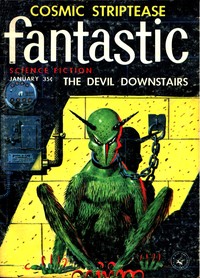
It’s funny how a transcript can feel so intimate. The Bellamy trial stayed with me like a half-remembered conversation, all those voices layering over each other, the reporter’s quiet edges between the testimony. It reminded me of that same hushed tension I felt with The devil downstairs — Context and Discussion, where every word seems to hold something just out of reach.
Build a private reading journal entry for this title.