About 82 minutes
The illustrated Tarzan book no. 1 — Key Ideas to Explore
Fantasy Juvenile Worlds
18,645 recorded words. 2 minutes difference from this book's estimate.
View Gutenberg source #75817
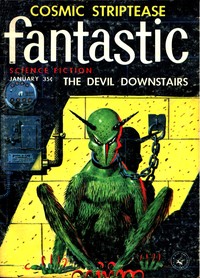
Before opening The devil downstairs — Context and Discussion, the edition data offers a quick orientation: 18,365 words, 1 hr 20 min estimated reading time, and 2 detected text sections.
The text analysis averages about 11.0 words per sentence, while the detected sections provide another way to judge how the source is divided.
Project Gutenberg metadata also associates the work with “Fantasy fiction,” connecting these edition facts with the source record’s subject description.
Explore this collection
These alternatives are selected using recorded categories and estimated reading time.
About 82 minutes
Fantasy Juvenile Worlds
18,645 recorded words. 2 minutes difference from this book's estimate.
View Gutenberg source #75817About 61 minutes
Fantasy Juvenile Worlds
13,964 recorded words. 19 minutes difference from this book's estimate.
View Gutenberg source #70570About 39 minutes
Fantasy Juvenile Worlds
8,758 recorded words. 41 minutes difference from this book's estimate.
View Gutenberg source #68930Search stored excerpts and compare books → Choose by your preferences →
Choices use stored catalog measurements. Estimates vary with reading speed. A shared category is a catalog label, not a claim that two books have the same argument or literary quality.
Search reads excerpt text stored with this catalog and links to its associated Gutenberg record. The connection is stored in the site database; this tool does not recheck that every excerpt is word-for-word identical to that external record. Excerpt search does not cover every chapter and does not verify historical publication dates.
Catalog snapshot checked: 2026-09-25. Coverage: 95 public books, 95 available source excerpts.
Read the complete public-domain text at its original source.
Read on Project GutenbergThe story opens with a domestic scene that quickly turns eerie: Joe Emerald, a private detective, is roused by his wife Pearl who insists there is a burglar in the house. Joe's grumpy reluctance—"Lemme sleep"—gives way to action when a lamp crashes. The intruder heads to the basement, and Joe follows with gun drawn. But the basement holds no ordinary thief. The narrative voice shifts from hardboiled to fantastic as the Devil himself appears, boasting that without him mortals would be in trouble. This collision of mundane marital squabbling and cosmic threat sets the tone for a tale that treats the supernatural with a detective's pragmatism.
The opening pages establish Joe Emerald as a weary, sardonic private eye. His wife Pearl is the anxious one, while Joe tries to dismiss the disturbance. The dialogue is crisp and natural: "What d'ya want me to do, get up and make him a cup of coffee?" This domestic realism makes the intrusion of the Devil more jarring. The basement setting—with its glass-block windows and hundred-watt bulbs—is described with the specificity of a man who knows his own house. Joe's professional instincts (checking the gun, noting the lack of exits) contrast with the absurdity of facing a supernatural entity. The reader is grounded in a recognizable world before the fantastic element arrives.
The Devil's opening boast—"Without me, you mortals would be in trouble. Your whole world would go to hell!"—is both a threat and a paradox. The story's premise hinges on this claim: if the Devil disappears, does order collapse? The excerpts show Joe and Pearl debating this after they escape. Pearl worries the Devil will seek revenge, while Joe suggests limitations: "He's not all-powerful. Otherwise he'd have the whole roost to himself." This exchange reveals the story's logic: the Devil is powerful but bound by rules. Joe's detective mind immediately looks for weaknesses, leading him to consider churches and exorcism rites. The narrative treats the Devil not as an abstract evil but as a tangible adversary with exploitable vulnerabilities.
After the initial confrontation, Joe and Pearl flee with their children. The middle excerpt shows them driving, discussing the Devil's new predicament: his original body may be dead, forcing him to inhabit others. Pearl's fear is palpable: "How can we do it all our lives?" Joe's response is practical—change names, seek a priest. The scene at the filling station and parish house introduces a new setting: a small town with a church, suggesting a turn toward institutional faith as a weapon. The headlights following them create suspense, but the Devil does not appear. This section shifts from action to psychological tension, as the couple must outthink an enemy who might know their every move.
The prose alternates between hardboiled detective patter and supernatural horror. Joe's internal monologue is terse and cynical: "Well, he won't get out that way!" Pearl's dialogue is more emotional, providing contrast. The story uses short chapters and rapid scene changes, typical of pulp fiction. The Devil's boast is delivered in a single line, then the narrative moves on without dwelling on its implications. This economy keeps the plot moving. The excerpts suggest a structure where each chapter escalates the threat while grounding it in domestic details—car trips, phone calls, waiting rooms. The blend of genres is seamless: the detective's methodical approach is applied to a demonic foe, making the fantastic feel plausible.
Readers should pay attention to how the story balances the mundane and the miraculous. Joe's detective skills—observation, deduction, skepticism—are tested against a foe who defies logic. The excerpts hint that the Devil's limitations may be as important as his powers. The narrative does not resolve whether faith or reason will prevail; it leaves that tension alive. Approach this as a puzzle story where the solution may require both a gun and a prayer.
That detective’s quiet dread in The Devil Downstairs stayed with me—how ordinary life cracks open into something older. I found myself thinking of that same unease later, in the quieter shadows of Red shadows — Edition Insights. There’s a weight there, too, like a room you enter and can’t quite leave. It lingers gently, the way some books do.
Build a private reading journal entry for this title.