About 80 minutes
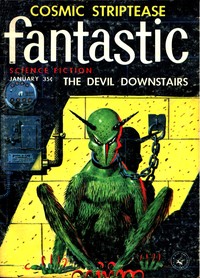
The devil downstairs — Context and Discussion
Fantasy Juvenile Worlds
18,365 recorded words. 2 minutes difference from this book's estimate.
View Gutenberg source #73703
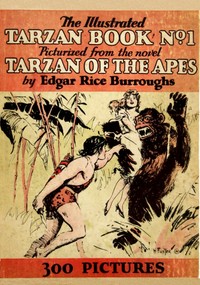
The illustrated Tarzan book no. 1 — Key Ideas to Explore can be approached with a clearer sense of reading commitment from its source measurements: 18,645 words, 1 hr 22 min estimated reading time, and 6 detected text sections.
The text analysis averages about 13.3 words per sentence, while the detected sections provide another way to judge how the source is divided.
Project Gutenberg metadata also associates the work with “Tarzan (Fictitious character) -- Fiction,” connecting these edition facts with the source record’s subject description.
Explore this collection
These alternatives are selected using recorded categories and estimated reading time.
About 80 minutes
Fantasy Juvenile Worlds
18,365 recorded words. 2 minutes difference from this book's estimate.
View Gutenberg source #73703About 61 minutes
Fantasy Juvenile Worlds
13,964 recorded words. 21 minutes difference from this book's estimate.
View Gutenberg source #70570About 39 minutes
Fantasy Juvenile Worlds
8,758 recorded words. 43 minutes difference from this book's estimate.
View Gutenberg source #68930Search stored excerpts and compare books → Choose by your preferences →
Choices use stored catalog measurements. Estimates vary with reading speed. A shared category is a catalog label, not a claim that two books have the same argument or literary quality.
Search reads excerpt text stored with this catalog and links to its associated Gutenberg record. The connection is stored in the site database; this tool does not recheck that every excerpt is word-for-word identical to that external record. Excerpt search does not cover every chapter and does not verify historical publication dates.
Catalog snapshot checked: 2026-09-25. Coverage: 95 public books, 95 available source excerpts.
Read the complete public-domain text at its original source.
Read on Project GutenbergThis edition condenses Edgar Rice Burroughs' first Tarzan novel into a picturized format, pairing Harold Foster's sequential illustrations with streamlined prose. The opening pages establish a mutiny aboard the Fuwalda, where Lord Greystoke intervenes to save a sailor, forging a bond that will later echo in Tarzan's own acts of protection. The narrative moves swiftly from shipboard violence to jungle survival, with the ape-man's first appearance marked by a lion kill and a wordless encounter with the stranded Clayton. Foster's artwork, advertised as containing 300 pictures, likely drives the pacing, compressing exposition into visual cues.
The excerpts repeatedly stage meetings where language fails. When Clayton first encounters Tarzan, the ape-man replies in a tongue "like monkeys chattering" and communicates through gestures—a shrug, a motion to follow, a grasp of the coat. Tarzan's diet of raw lion meat further distances him from Clayton's expectations. These scenes hinge on physical rather than verbal exchange: Tarzan carries Clayton through the trees, balancing double weight on branches, while Clayton admires "those giant muscles." The narrative emphasizes the gap between civilized speech and embodied action, a tension that drives the plot forward without resolving it.
The beach cabin becomes a claustrophobic stage for the novel's most sustained suspense sequence. Jane and the maid Esmeralda wait inside as a lioness—named Sabor—sniffs at the door, scratches, and finally forces the window lattice. The description tracks the beast's progress in measured steps: "one great paw," then the head, then the shoulders spreading the bars. Jane's discovery of Clayton's revolver and her single shot provide a momentary reprieve, but the lioness is not killed. The scene ends with Jane fainting twice, leaving the threat unresolved until Tarzan's arrival. This episode showcases Burroughs' ability to generate tension through confined space and sensory detail.
Tarzan's rescue of Clayton after the gunshot is rendered as a feat of arboreal navigation. The ape-man carries the Englishman on his back, swinging "from one lofty branch" to another, threading "a maze of interwoven limbs" at dizzying heights. The narrative notes that despite apparent speed, Tarzan moves cautiously, testing branches for strength under double weight. This practical detail grounds the fantastical action in a logic of survival. Clayton's perspective—catching his breath at the "horrid depths"—contrasts with Tarzan's instinctive mastery, reinforcing the theme of physical competence over verbal authority.
Readers approaching this picturized edition should attend to how Foster's illustrations and Burroughs' condensed text work together to emphasize action over interiority. The excerpts suggest a narrative built around set pieces—mutiny, lion attack, tree chase—rather than character development. Pay particular attention to the visual pacing of the cabin siege and the tree-top rescue, where the interplay of image and word likely shapes the story's rhythm.
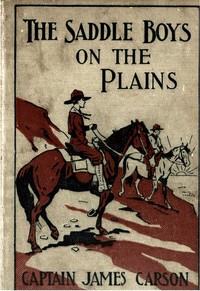
I found myself thinking about those Tarzan illustrations long after closing the book—the way wildness and quiet understanding exist in the same frame. It reminded me of a slower, simpler story I once loved, where the landscape itself felt like a character. That same lingering warmth lives in The saddle boys on the plains — Inside the Classic, and I remember its plains as if I’d ridden them myself.
Answer a few questions and save a private reflection on this device.