About 55 minutes
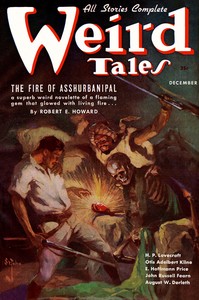
The fire of Asshurbanipal — Key Ideas to Explore
Adventure Picaresque Fiction
12,581 recorded words. 1 minutes difference from this book's estimate.
View Gutenberg source #71085
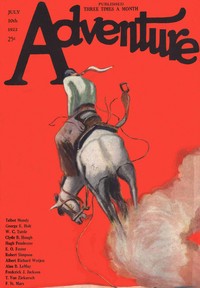
This digital edition of Ajax, for example — A Closer Reading is described by source-level measurements including 12,206 words, 54 min estimated reading time, and 2 detected text sections.
The text analysis averages about 13.4 words per sentence, while the detected sections provide another way to judge how the source is divided.
Project Gutenberg metadata also associates the work with “Western stories,” connecting these edition facts with the source record’s subject description.
Explore this collection
These alternatives are selected using recorded categories and estimated reading time.
About 55 minutes
Adventure Picaresque Fiction
12,581 recorded words. 1 minutes difference from this book's estimate.
View Gutenberg source #71085About 44 minutes
Adventure Picaresque Fiction
9,933 recorded words. 10 minutes difference from this book's estimate.
View Gutenberg source #75015About 135 minutes
Adventure Picaresque Fiction
30,918 recorded words. 81 minutes difference from this book's estimate.
View Gutenberg source #68931Search stored excerpts and compare books → Choose by your preferences →
Choices use stored catalog measurements. Estimates vary with reading speed. A shared category is a catalog label, not a claim that two books have the same argument or literary quality.
Search reads excerpt text stored with this catalog and links to its associated Gutenberg record. The connection is stored in the site database; this tool does not recheck that every excerpt is word-for-word identical to that external record. Excerpt search does not cover every chapter and does not verify historical publication dates.
Catalog snapshot checked: 2026-09-25. Coverage: 95 public books, 95 available source excerpts.
Read the complete public-domain text at its original source.
Read on Project GutenbergThe story begins not with action but with a definition: Magpie Simpkins declares that "horse sense" is knowledge no schoolteacher can impart, and offers Ajax as an example. The narrator, Ike, immediately agrees, launching into a complaint about "educated fools" who consult books for the simplest tasks. This opening establishes a conversational, opinionated voice that will carry the reader through the tale. The first encounter with Ajax—a man whose hat is "a cross between a ordinary hard hat and a campaign lid," whose nose is likened to a fiddle string, and whose long neck and ill-fitting clothes are described in painstaking detail—sets the tone for a comedy of physical description and verbal misunderstanding.
Ike, the first-person narrator, does not simply report events; he editorializes constantly. His opening rant against book learning is not a one-off but a pattern: he interrupts the story to explain why he agrees with Magpie, to describe Ajax from head to foot, and to comment on the absurdity of the situations. This digressive style invites the reader to enjoy the narrator's personality as much as the plot. Notice how Ike frames the arrival of Ajax: "I'll begin at the top and work on down." He then spends several paragraphs on the man's hat, hair, spectacles, nose, chin, neck, shoulders, and clothing before any action occurs. The humor depends on the reader's willingness to follow these tangents.
The excerpts show a pattern of escalating physical chaos rooted in miscommunication. When the sheriff, Scenery, arrives and tries to arrest the cowboys, Magpie throws him out the door just as Ajax is entering. The two collide: "When an irresistible jackass meets an immovable educated fool there is something going on." The fight that follows is described in a flurry of hoofs, boots, and dust. Later, Ajax seems unaware that he fought at all, asking, "Did I—I fight a man?" and speculating that he was attacked by "a specimen of the genus Ovius" (sheep). This gap between Ajax's academic interpretation and the cowboys' practical reality drives the comedy.
Ajax's dialogue reveals a man who processes the world through definitions and classifications. When Magpie asks if he knows who knocked Scenery into the cabin, Ajax responds by defining "scenery" as "the general aspect, as regards variety or beauty, or the reverse, of a landscape." He later describes a near-miss from a bullet as a "singing noise" and speculates that the shooter said "Pshaw! Missed entirely!" and "I should have had higher aspirations." These quotations, though brief, show Ajax applying a detached, analytical vocabulary to violent events. The cowboys' exasperation—Ike grabs Magpie to prevent an attack—underscores the cultural clash.
The narrative voice is rich with colloquialisms and inventive similes. Ike describes Ajax's nose as so long that "it must blow about the same note as the stopped-down E string on a fiddle." He says the man's chin is so long that "the weight of it holds his mouth open." The dialogue is peppered with exclamations like "Zowie!" and "whooee!" and contractions such as "ain't" and "daw-gonned." This vernacular style is consistent and carefully crafted, giving the story a distinct oral quality. Readers should listen for the rhythm of Ike's speech, which often loops back on itself, as when he says, "Me and you both know that there's educated fools."
As you read, pay attention to how the narrator's digressions and the characters' conflicting worldviews build the comedy. The excerpts suggest a story that moves from one misunderstanding to the next, with Ajax's literal-mindedness and the cowboys' practical humor creating a pattern of physical and verbal slapstick. The short length—around 12,000 words—means the humor is concentrated, so each scene rewards close attention to the language and the characters' reactions.
There’s a particular ache in watching Ajax’s logic bump against Ike and Magpie’s world, a loneliness that lingers after the laughter. It reminds me of the quieter ache I felt with The Indian queen — Reading Companion, where a different kind of distance sits between people who mean well. Sometimes the funniest stories leave the saddest echo, don’t they? Just a thought that stayed with me.
Create a short personal record of your experience with this book.