About 329 minutes
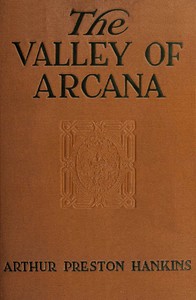
The valley of Arcana — Themes and Context
Adventure Picaresque Fiction
75,530 recorded words. 16 minutes difference from this book's estimate.
View Gutenberg source #69880
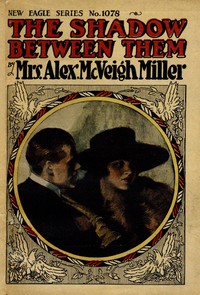
The shadow between them; — Themes and Context can be approached with a clearer sense of reading commitment from its source measurements: 79,194 words, 5 hr 45 min estimated reading time, and 47 detected text sections.
The text analysis averages about 19.2 words per sentence, while the detected sections provide another way to judge how the source is divided.
Project Gutenberg metadata also associates the work with “Orphans -- Fiction,” connecting these edition facts with the source record’s subject description.
Explore this collection
These alternatives are selected using recorded categories and estimated reading time.
About 329 minutes
Adventure Picaresque Fiction
75,530 recorded words. 16 minutes difference from this book's estimate.
View Gutenberg source #69880About 377 minutes
Adventure Picaresque Fiction
86,691 recorded words. 32 minutes difference from this book's estimate.
View Gutenberg source #73686About 388 minutes
Adventure Picaresque Fiction
89,178 recorded words. 43 minutes difference from this book's estimate.
View Gutenberg source #73393Search stored excerpts and compare books → Choose by your preferences →
Choices use stored catalog measurements. Estimates vary with reading speed. A shared category is a catalog label, not a claim that two books have the same argument or literary quality.
Search reads excerpt text stored with this catalog and links to its associated Gutenberg record. The connection is stored in the site database; this tool does not recheck that every excerpt is word-for-word identical to that external record. Excerpt search does not cover every chapter and does not verify historical publication dates.
Catalog snapshot checked: 2026-09-25. Coverage: 95 public books, 95 available source excerpts.
Read the complete public-domain text at its original source.
Read on Project GutenbergMrs. Alex. McVeigh Miller's The Shadow Between Them; or, A Blighted Name (1900) opens with a chapter titled “I Love Him Whoever He Is!”—a declaration that immediately establishes the headlong emotional register of the novel. The narrative voice moves with swift, declarative sentences, rarely pausing for descriptive digression. Dialogue carries much of the plot: characters speak in exclamations, accusations, and tearful confessions, often within the same paragraph. The pace is driven by a series of confrontations—Eva's encounter with Doctor St. Clair in Chapter XIX, for instance, unfolds as a rapid volley of threats, insults, and revelations, with little physical description to slow the scene. This breathless rhythm is typical of the dime-novel style, where emotional intensity substitutes for psychological depth.
The narrator rarely hedges. Characters are introduced with clear moral labels: Doctor St. Clair is a “smooth villain,” Eva a “hapless girl” and “martyr.” The language of the excerpts shows a consistent pattern of direct judgment—words like “vile,” “scathingly,” “indignant,” and “vengefully” leave no ambiguity about who deserves sympathy. This moral clarity extends to the heroine's internal state: Eva's thoughts are rendered in exclamatory bursts (“Oh, what will Doctor Rupert say?”) that align the reader with her distress. The narrative voice does not invite interpretation; it insists on the righteousness of its protagonist and the villainy of her persecutors. This technique, common in sentimental fiction, creates a fast-moving plot where emotional reactions are telegraphed rather than explored.
The novel's structure relies on a series of high-stakes encounters. In the excerpt from Chapter XIX, the scene between Eva and Doctor St. Clair is a compressed drama: within a few paragraphs, he propositions her, she threatens to report him, he fires her, and she flees into the arms of Ada Winton. The pacing is accelerated by the absence of transitional description—the reader moves from dialogue to action without pause. Similarly, Chapter XX opens with Eva's anxious question (“Oh, what will Doctor Rupert say?”) and immediately shifts to Ada's practical advice. This pattern of crisis followed by rapid resolution or new complication keeps the narrative momentum high. The table of contents confirms this: chapter titles like “An Awful Grief,” “A Weird Funeral,” and “Driven from Home” promise continuous upheaval.
Two motifs recur in the excerpts: the threat of scandal and the imperative of silence. Eva is “under a cloud” and fears “another scandal associated with her pure name.” Ada counsels, “A still tongue makes a wise head,” advising secrecy even under injustice. The narrative voice treats scandal as a tangible force that can “blight” a name and drive a person from home. The word “blighted” appears in the subtitle and in Eva's lament about her “fair name with an indelible stain.” This preoccupation with reputation shapes the plot's logic: characters act not only from emotion but from a desperate need to control public perception. The excerpts suggest that silence is both a survival strategy and a source of dramatic tension, as secrets accumulate and threaten to erupt.
Readers approaching The Shadow Between Them should expect a narrative that prioritizes emotional immediacy over psychological realism. The novel's pace is relentless, its moral divisions stark, and its dialogue charged with feeling. Pay attention to how Miller uses repetition—of words like “scandal,” “innocent,” and “martyr”—to reinforce the heroine's plight. The West Virginia setting, glimpsed only briefly in the excerpts, may offer a contrast to the urban hospital scenes. This is a story driven by confrontation and the fear of exposure, best read for its energetic plotting rather than its subtlety.
There’s something almost tender in how that old dime novel rushes its characters through scandals, certain of every moral turn—a comfort I don’t often find anymore. It reminds me of the strange, slow dread in The fire of Asshurbanipal — Key Ideas to Explore, where certainty dissolves instead. Two different kinds of shadow, I suppose, but both linger long after the pages close.
Your answers remain private and are stored only in this browser.