About 345 minutes
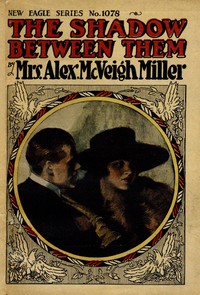
The shadow between them; — Themes and Context
Adventure Picaresque Fiction
79,194 recorded words. 16 minutes difference from this book's estimate.
View Gutenberg source #70010
For The valley of Arcana — Themes and Context, the stored edition analysis reports 75,530 words, 5 hr 29 min estimated reading time, and 32 detected text sections.
The text analysis averages about 15.5 words per sentence, while the detected sections provide another way to judge how the source is divided.
Project Gutenberg metadata also associates the work with “Young women -- Fiction,” connecting these edition facts with the source record’s subject description.
Explore this collection
These alternatives are selected using recorded categories and estimated reading time.
About 345 minutes
Adventure Picaresque Fiction
79,194 recorded words. 16 minutes difference from this book's estimate.
View Gutenberg source #70010About 377 minutes
Adventure Picaresque Fiction
86,691 recorded words. 48 minutes difference from this book's estimate.
View Gutenberg source #73686About 271 minutes
Adventure Picaresque Fiction
62,182 recorded words. 58 minutes difference from this book's estimate.
View Gutenberg source #73709Search stored excerpts and compare books → Choose by your preferences →
Choices use stored catalog measurements. Estimates vary with reading speed. A shared category is a catalog label, not a claim that two books have the same argument or literary quality.
Search reads excerpt text stored with this catalog and links to its associated Gutenberg record. The connection is stored in the site database; this tool does not recheck that every excerpt is word-for-word identical to that external record. Excerpt search does not cover every chapter and does not verify historical publication dates.
Catalog snapshot checked: 2026-09-25. Coverage: 95 public books, 95 available source excerpts.
Read the complete public-domain text at its original source.
Read on Project GutenbergDr. Inman Shonto and Andy Jerome, seasoned travelers of Southern California's deserts, find themselves disoriented in the dense redwood forests of Northern California. The opening chapter, 'An Extra Bed,' immediately establishes a tone of bewilderment as the men navigate towering trees that seem 'impossible' in their scale, their silence broken only by the fog creeping in from the sea. This physical disorientation mirrors a deeper uncertainty about the social codes they will soon confront.
The narrative voice shifts between descriptive passages of the landscape and extended dialogues that probe societal norms. The excerpts reveal a story less concerned with plot mechanics than with the friction between individual desire and inherited convention, a tension that plays out in the remote setting of the titular valley.
The novel opens with a precise geography of confusion. Shonto and Jerome are 'hopelessly lost' despite their extensive experience, surrounded by timber 'vaster than they had dreamed.' The redwoods are described with a mix of awe and unease: 'straight as the path of righteousness, solemn, aloof—impossible trees.' This language suggests that the landscape itself resists easy understanding, functioning as more than mere backdrop.
The fog, the steep slopes, and the absence of familiar landmarks create a sensory experience of being unmoored. Hankins emphasizes the men's silence as they hurry, sliding and clambering, hoping for a sign. This opening establishes a pattern: the physical journey through unknown terrain parallels a psychological journey into unfamiliar social territory. Readers should note how the environment repeatedly forces the characters to confront their own assumptions, whether about direction or about proper behavior.
In a later excerpt, Shonto and a woman named Charmian sit by a campfire and discuss whether women should smoke. The scene is notable for its extended, almost essayistic dialogue. Shonto rolls a cigarette for Charmian, who admits she knows how but rarely does. What follows is a philosophical exchange on taboo, tradition, and logic.
Shonto argues that the prohibition against women smoking is 'only another example of the slavery to which woman has been subjected.' He compares smoking to top-spinning or candy-eating, noting that men may injure themselves 'with impunity' while women who do the same are deemed immoral. Charmian agrees, calling it 'another of our stupid taboos.' The dialogue is remarkably direct in its critique of conservative society, and it reveals Shonto as a character who prides himself on rational thought. Readers should watch for how this intellectual stance is tested by the events of the plot.
The campfire conversation contains a concentrated statement of the novel's thematic concerns. Shonto asks, 'Why think for ourselves, when the ancients went to so much trouble to prescribe for us our taboos and our religious beliefs and our standard of morals?' This rhetorical question encapsulates the tension between inherited custom and individual reasoning that runs through the excerpts.
Charmian's response—'And isn't there any hope for us, Doctor Shonto? Will nothing make us think?'—prompts Shonto to cite the Great War as a catalyst for critical thought. This exchange suggests that the novel is interested in the possibility of social change, even as its characters remain embedded in a world of rigid expectations. The dialogue is not merely filler; it establishes a framework for understanding the characters' later choices. The reader should consider how the abstract debate about smoking might prefigure more consequential decisions about love, marriage, and independence.
The excerpts provided offer only fragments of the novel's plot. We know from the catalog that the story involves a young woman, a widow, and mate selection, set in California. The chapter titles hint at adventure: 'The Prospector's Story,' 'The Trail to Mosquito,' 'The Cave of Hypocritical Frogs.' Yet the excerpts focus on conversation and description rather than action.
This imbalance is instructive for a first reading. The novel appears to value intellectual exchange as much as physical adventure. The opening's emphasis on being lost—both geographically and ideologically—suggests that the characters' journey through the redwoods is also a journey toward self-definition. Readers should approach the text with an eye for how the debates about taboo and tradition are embodied in the characters' relationships. The excerpts do not reveal the resolution, but they establish a clear thematic tension between conformity and independence.
As you read The Valley of Arcana, pay attention to how the landscape mirrors the characters' internal states. The redwoods are not just scenery; they are a presence that challenges the characters' sense of scale and certainty. Likewise, the dialogues are not digressions but central to the novel's exploration of social rules. The excerpts suggest a work that uses adventure as a vehicle for social commentary, and the reader who tracks the interplay between setting and conversation will find a coherent thematic architecture beneath the surface of the plot.
That rainy afternoon, Hankins’s redwoods felt so heavy with unspoken things—the widow’s quiet glances, the prospector’s riddles. I kept thinking about what people leave unsaid between them. Later, drying the book’s cover, I picked up The shadow between them; — Themes and Context, and somehow the same hush followed me, a different valley, same weather inside.
Build a private reading journal entry for this title.