About 429 minutes
Odeyne's marriage — Edition Insights
England London Nineteenth Century Fiction
98,653 recorded words. 5 minutes difference from this book's estimate.
View Gutenberg source #76100
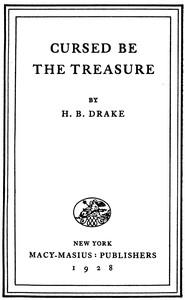
The source record for Cursed be the treasure — A Reader’s Guide measures this digital text at 99,731 words, 7 hr 14 min estimated reading time, and 33 detected text sections.
The text analysis averages about 19.4 words per sentence, while the detected sections provide another way to judge how the source is divided.
Project Gutenberg metadata also associates the work with “England -- Fiction,” connecting these edition facts with the source record’s subject description.
Explore this collection
These alternatives are selected using recorded categories and estimated reading time.
About 429 minutes
England London Nineteenth Century Fiction
98,653 recorded words. 5 minutes difference from this book's estimate.
View Gutenberg source #76100About 446 minutes
England London Nineteenth Century Fiction
102,431 recorded words. 12 minutes difference from this book's estimate.
View Gutenberg source #75170About 419 minutes
England London Nineteenth Century Fiction
96,215 recorded words. 15 minutes difference from this book's estimate.
View Gutenberg source #69420Search stored excerpts and compare books → Choose by your preferences →
Choices use stored catalog measurements. Estimates vary with reading speed. A shared category is a catalog label, not a claim that two books have the same argument or literary quality.
Search reads excerpt text stored with this catalog and links to its associated Gutenberg record. The connection is stored in the site database; this tool does not recheck that every excerpt is word-for-word identical to that external record. Excerpt search does not cover every chapter and does not verify historical publication dates.
Catalog snapshot checked: 2026-09-25. Coverage: 95 public books, 95 available source excerpts.
Read the complete public-domain text at its original source.
Read on Project GutenbergH. B. Drake's Cursed Be the Treasure opens with a first-person narrator who admits that his story's beginnings are "blurred and confused," yet he must "disentangle them" to proceed. This self-conscious framing immediately establishes a voice that is both retrospective and uncertain, drawing the reader into a world where memory itself is part of the mystery. The narrative voice is central to the novel's effect: it is the medium through which the reader experiences the "net of mystery woven long since of dark and incredible things."
Drake's prose is notable for its sensory specificity—the "night of wind and rain" that triggers the narrator's first clear memory, the "tapping at the window" of the first chapter title. These details ground the story in a tangible, often ominous physical world, while the narrator's childhood perspective filters events through a lens of wonder and incomplete understanding.
The narrator's opening admission that his early memories are "shapeless shadows" sets the stage for a tale told from a limited, evolving perspective. He describes being "nursed in the atmosphere of mystery" before he could reason, so that nothing seemed strange. This is a key authorial choice: by using a child's viewpoint, Drake can present extraordinary events—sudden flights, hidden dangers, a father who tells "thrilling stories of pirates and smugglers"—without the need for adult explanation. The reader must piece together the truth alongside the narrator, whose understanding grows only gradually. The effect is a narrative that feels both intimate and opaque, as the reader is confined to what the young protagonist perceives and remembers.
Drake's dialogue often carries the weight of emotional conflict and plot advancement. In one excerpt, the exchange between the narrator and Jenny escalates rapidly: she declares "I hate you, I hate you!" and he responds by threatening suicide with a pistol. The dialogue is clipped and charged, with each line revealing character—Jenny's imperiousness and volatility, the narrator's impulsiveness and self-pity. The moment is defused only by a distant whistle, a sailor's chantey associated with the narrator's father. This pivot shows how Drake uses dialogue not just for exposition but to create sudden shifts in mood and direction. The characters' words often mask deeper fears and loyalties, as when Jenny insists, "He loves you," referring to her father, and then implores the narrator to "find the bad man."
The physical environments in the excerpts are never merely backdrops. The "great dark house" where the narrator feels unsafe, the "shadowy road towards Rancey Bridge," and the "Dolphin Inn" mentioned as a destination all carry emotional weight. The narrator's world is one of "passing lights and shadows, with nothing definite or stationary," mirroring his own confusion and instability. When he searches for his father after hearing the whistle, he finds only "one immense fellow swinging up the shadowy road," a figure too large to be his father, yet suggestive of the looming, ambiguous threats that populate the story. Drake's descriptions are economical but evocative: the "accursed house" and the "lonely and miserable" walk back create a palpable sense of dread and longing.
A striking detail in the excerpts is the use of sound as a narrative device. The narrator hears a "faintest echo of a whistle" that he recognizes as a sailor's chantey his father used to sing. This auditory cue triggers an immediate emotional and physical response—the pistol drops, he listens, he races out to search. Later, he whistles "odd snatches of melody" hoping his father will respond. The motif of whistling and chanteys functions as a secret language between father and son, a thread of connection in a world of separation and danger. It also introduces ambiguity: the narrator wonders if he has been "tricked by a mischievous spirit" when the whistling turns out to be from a stranger. This uncertainty about signals and signs permeates the narrative, reinforcing the theme of elusive truth.
Readers approaching Cursed Be the Treasure should attend closely to the narrator's voice and its limitations. Drake's decision to filter the story through a child's memory means that events are often presented without full context, inviting the reader to question what is being withheld or misremembered. The interplay between what is said in dialogue and what is described in setting creates a layered narrative where tension arises as much from what is unsaid as from what is shown. This is a story that rewards careful attention to its craft.
Drake’s treasure is cursed, but quieter books hold their own shadows. That first-person unease—the fog, the whispers between speech and silence—always reminds me of wandering Rob Roy’s hills, where every confident step conceals a doubt. I keep them side by side. The adventures of Rob Roy — Reading Notes feels like a lantern for that darker old companion.
Build a private reading journal entry for this title.









