About 434 minutes
Cursed be the treasure — A Reader’s Guide
England London Nineteenth Century Fiction
99,731 recorded words. 5 minutes difference from this book's estimate.
View Gutenberg source #75790
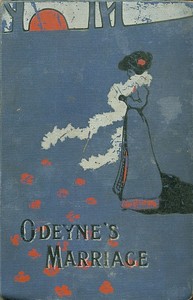
For Odeyne's marriage — Edition Insights, the stored edition analysis reports 98,653 words, 7 hr 9 min estimated reading time, and 8 detected text sections.
The text analysis averages about 18.1 words per sentence, while the detected sections provide another way to judge how the source is divided.
Project Gutenberg metadata also associates the work with “England -- Social life and customs -- 19th century -- Fiction,” connecting these edition facts with the source record’s subject description.
Explore this collection
These alternatives are selected using recorded categories and estimated reading time.
About 434 minutes
England London Nineteenth Century Fiction
99,731 recorded words. 5 minutes difference from this book's estimate.
View Gutenberg source #75790About 419 minutes
England London Nineteenth Century Fiction
96,215 recorded words. 10 minutes difference from this book's estimate.
View Gutenberg source #69420About 418 minutes
England London Nineteenth Century Fiction
95,974 recorded words. 11 minutes difference from this book's estimate.
View Gutenberg source #73472Search stored excerpts and compare books → Choose by your preferences →
Choices use stored catalog measurements. Estimates vary with reading speed. A shared category is a catalog label, not a claim that two books have the same argument or literary quality.
Search reads excerpt text stored with this catalog and links to its associated Gutenberg record. The connection is stored in the site database; this tool does not recheck that every excerpt is word-for-word identical to that external record. Excerpt search does not cover every chapter and does not verify historical publication dates.
Catalog snapshot checked: 2026-09-25. Coverage: 95 public books, 95 available source excerpts.
Read the complete public-domain text at its original source.
Read on Project GutenbergEvelyn Everett-Green builds Odeyne's marriage around a series of carefully managed transitions between private and public settings. The opening chapter places the reader in a dainty invalid's bedroom, where the bride-to-be is discussed as an object of pity and speculation. This confined domestic space recurs throughout the excerpts—Odeyne's boudoir, her sickroom after childbirth—and is contrasted with scenes of carriage drives, visits, and the anticipated social life of the Chase. The structure itself mirrors the protagonist's movement between these spheres, with each shift carrying emotional weight.
The novel repeatedly uses interior spaces to signal a character's status or mood. The invalid mother's cap and pillows are described with a precision that suggests control over her environment. Later, Odeyne's boudoir becomes a stage for receiving friends while she is still confined upstairs. The nurse's exclamation—'Sir, sir, you'll kill the blessed lamb!'—anchors the nursery as a site of both tenderness and comic anxiety. These rooms are not backdrops but active elements: they define who may speak, who may move, and what tensions are permissible.
Movement between houses structures the narrative's pacing. Jem Ritchie's complaint that Odeyne's absence will make the Chase less amusing points to a social calendar built on visits, drives, and garden parties. The carriage itself becomes a token of generosity—Odeyne lends it to the Ritchie sisters—and a vehicle for information. Jem's frank speech often gives Odeyne 'an insight behind the scenes,' suggesting that these journeys are conduits for plot-relevant gossip. The promised trip to the Rectory introduces a longer journey, hinting at a shift in the novel's geography.
Conversations in the excerpts rarely advance action directly; instead, they layer subtext. The invalid mother's remark—'I wonder how the poor girl will get on'—establishes a skeptical tone that colors subsequent interactions. Jem's adoration is voiced with a frankness that borders on impertinence, and Odeyne's response—'Not for ever so long'—is a gentle deflection. Even the nurse's comic protests about the baby's corals and bells reveal Desmond's character through reported speech. Everett-Green lets characters expose themselves through what they say and how others react.
Images of being shut up, confined, or released run through the text. Jem laments that Odeyne has been 'shut up' and is now going away; Odeyne herself looks forward to getting strong and returning to her duties. The baby, little Guy, is both a source of joy and a tie that binds. The phrase 'the pace that kills' appears as a chapter title, suggesting that speed—whether of social life or emotional strain—will become a central concern. These recurring motifs create a texture of anticipation and unease beneath the domestic surface.
Readers approaching Odeyne's marriage will find a novel that rewards attention to its spatial and conversational rhythms. The excerpts offer only fragments of the full plot, but they reveal a writer skilled at using setting and speech to imply more than is stated. Pay particular attention to who moves, who stays, and what is said in the gaps between polite remarks.
I often think how Everett-Green’s marriage is so much about doors left ajar—those moments when a woman steps from her parlour into a hallway and everything shifts. The same quiet breach haunts The mating impulse — A Reader’s Guide, where impulse waits just behind manners. Two old friends, really, whispering the same secret.
Your answers remain private and are stored only in this browser.









