About 335 minutes
The mis-rule of three — Background and Themes
England London Nineteenth Century Fiction
77,012 recorded words. 1 minutes difference from this book's estimate.
View Gutenberg source #72669
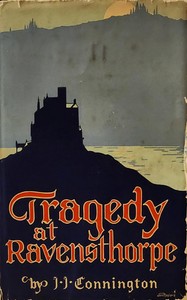
The catalog record for Tragedy at Ravensthorpe — Context and Discussion provides practical reading context through 77,221 words, 5 hr 36 min estimated reading time, and 19 detected text sections.
The text analysis averages about 13.1 words per sentence, while the detected sections provide another way to judge how the source is divided.
Project Gutenberg metadata also associates the work with “Detective and mystery stories,” connecting these edition facts with the source record’s subject description.
Explore this collection
These alternatives are selected using recorded categories and estimated reading time.
About 335 minutes
England London Nineteenth Century Fiction
77,012 recorded words. 1 minutes difference from this book's estimate.
View Gutenberg source #72669About 337 minutes
England London Nineteenth Century Fiction
77,366 recorded words. 1 minutes difference from this book's estimate.
View Gutenberg source #74886About 331 minutes
England London Nineteenth Century Fiction
76,072 recorded words. 5 minutes difference from this book's estimate.
View Gutenberg source #69087Search stored excerpts and compare books → Choose by your preferences →
Choices use stored catalog measurements. Estimates vary with reading speed. A shared category is a catalog label, not a claim that two books have the same argument or literary quality.
Search reads excerpt text stored with this catalog and links to its associated Gutenberg record. The connection is stored in the site database; this tool does not recheck that every excerpt is word-for-word identical to that external record. Excerpt search does not cover every chapter and does not verify historical publication dates.
Catalog snapshot checked: 2026-09-25. Coverage: 95 public books, 95 available source excerpts.
Read the complete public-domain text at its original source.
Read on Project GutenbergThe novel opens with Sir Clinton Driffield, the new Chief Constable, walking the Ravensthorpe grounds with Cecil Chacewater. Their conversation quickly establishes Sir Clinton's unfamiliarity with the estate and his past acquaintance with Cecil's father, setting up a contrast between the settled life of the English countryside and Sir Clinton's recent return from a police post in South Africa. The talk turns to a masked ball for Joan's coming-of-age, hinting at festivities that will soon be disrupted.
The early chapters introduce a theft at the ball and a chase in the woods, but the narrative's focus remains on character interactions and the gradual accumulation of details. The reader is drawn into the social dynamics of Ravensthorpe before the central crime occurs.
The first chapter, “The Fairy Houses,” immediately grounds the reader in the physical and social landscape of Ravensthorpe. Sir Clinton and Cecil’s stroll is filled with specific details: the “long front of the house,” the mention of Sir Clinton’s new house being “less trouble to fit up,” and the ten-year gap since they last met. This dialogue-driven opening efficiently introduces the key figures—Sir Clinton, Cecil, and the unseen Maurice and Joan—while also hinting at the Chief Constable’s professional role. The mention of the masked ball as “for Joan’s coming-of-age” provides a clear timeline and a reason for the gathering. The tone is conversational, with Sir Clinton’s observations revealing his methodical nature: he notes the irony of his first post being in the district he never visited. This slow, deliberate start contrasts with the later action, inviting the reader to pay attention to every remark.
Later in the novel, the murder of Mr. Foss in the museum is described through Marden’s testimony. The scene is rich with sensory and spatial details: the “parquet—it’s very slippery,” the broken glass case, the “big knife or a dagger through his chest.” Marden’s account is precise about his own actions—he slipped, cut his hand, wrapped it in a handkerchief—and his observations: Mr. Chacewater had his back to him and turned a corner, then vanished. Sir Clinton’s questions focus on what Marden heard (“only two voices”) and what he saw (the safe door closed and locked). This section exemplifies Connington’s method: the reader must piece together the sequence of events from conflicting testimonies. Inspector Armadale’s hostile questioning adds tension, while Sir Clinton’s calm inquiries reveal his investigative approach. The mention of Foss’s costume as a “cow-puncher” with “big heavy things with fringes” is a small but telling detail that may later prove significant.
Throughout the excerpts, a pattern of mysterious disappearances emerges. In the opening, Cecil’s lack of response to Sir Clinton’s comment about the house hints at unspoken tensions. Later, Mr. Chacewater vanishes from the museum despite Marden’s certainty that no one could have left unseen. Sir Clinton’s question—“It didn’t occur to you that he might have slipped out of the room while your back was turned?”—highlights the puzzle of a locked-room mystery. The novel’s chapter titles, such as “The Chase in the Woods” and “Underground Ravensthorpe,” suggest hidden passages or secret routes. The reader should note every reference to architecture, movement, and sightlines; Connington builds his puzzle on such physical details. The reappearance of the “safe door” and the locked safe further emphasize concealment and access.
Connington relies heavily on dialogue to advance the plot and reveal character. In the opening, Sir Clinton and Cecil’s exchange is natural yet laden with backstory—the ten-year absence, the father’s collection, the invitation to the ball. In the murder scene, Marden’s testimony is presented as a direct account, with Sir Clinton and Armadale interrupting to clarify points. This technique forces the reader to evaluate each statement’s reliability. Note how Marden corrects himself: “I couldn’t swear that only two people were in the room.” The narrative rarely offers omniscient insight; instead, it presents what characters say and do. This approach aligns with the detective genre’s emphasis on evidence and deduction. The reader is encouraged to treat every piece of dialogue as a clue, weighing it against later revelations.
As you read Tragedy at Ravensthorpe, pay close attention to the physical layout of the house and grounds, the timing of events, and the characters’ movements. Connington provides many small details that may seem incidental but often prove crucial. The novel rewards careful reading; consider keeping a mental map of who was where and when. The solution, when it comes, is built on the evidence you have already encountered.
There’s a particular comfort in returning to Tragedy at Ravensthorpe, where every clue waits patiently for a quiet eye. It reminds me of how I once lingered over The adventures of Rob Roy — Reading Notes, sensing the same unhurried trust in detail, in the small things that turn out to matter. Old books keep such gentle company.
Save your reaction, strongest insight, and memorable passage.









