About 53 minutes
The lost charm — Edition Insights
England London Nineteenth Century Fiction
12,121 recorded words. 2 minutes difference from this book's estimate.
View Gutenberg source #71816
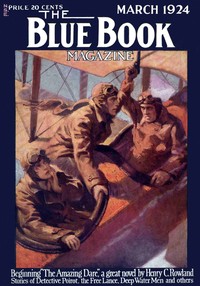
The source record for Into the blue — Reading Companion measures this digital text at 11,542 words, 51 min estimated reading time, and 2 detected text sections.
The text analysis averages about 15.8 words per sentence, while the detected sections provide another way to judge how the source is divided.
Project Gutenberg metadata also associates the work with “Short stories,” connecting these edition facts with the source record’s subject description.
Explore this collection
These alternatives are selected using recorded categories and estimated reading time.
About 53 minutes
England London Nineteenth Century Fiction
12,121 recorded words. 2 minutes difference from this book's estimate.
View Gutenberg source #71816About 64 minutes
England London Nineteenth Century Fiction
14,533 recorded words. 13 minutes difference from this book's estimate.
View Gutenberg source #73249About 65 minutes
England London Nineteenth Century Fiction
14,918 recorded words. 14 minutes difference from this book's estimate.
View Gutenberg source #74121Search stored excerpts and compare books → Choose by your preferences →
Choices use stored catalog measurements. Estimates vary with reading speed. A shared category is a catalog label, not a claim that two books have the same argument or literary quality.
Search reads excerpt text stored with this catalog and links to its associated Gutenberg record. The connection is stored in the site database; this tool does not recheck that every excerpt is word-for-word identical to that external record. Excerpt search does not cover every chapter and does not verify historical publication dates.
Catalog snapshot checked: 2026-09-25. Coverage: 95 public books, 95 available source excerpts.
Read the complete public-domain text at its original source.
Read on Project GutenbergThe narrator's first-person voice is established immediately as bitterly pessimistic, describing Southbeach as a 'dreary desert of uninteresting people' and the holiday as spoiled. The prose is dense with sensory detail—the 'baking sun,' 'glittering stretch of the English Channel,' and the 'vivid polychromatism' of flappers' sports-coats—but the mood is one of alienation. This opening, with its sardonic self-awareness and sharp social observation, sets a tone that is more ironic adventure than romantic idyll.
The narrator, a veteran who 'had done all the flying I wanted in the war,' is thrust back into the cockpit by Toby Selwyn, an old comrade whose enthusiasm borders on mania. Toby's character is sketched through action rather than description: he slaps the narrator on the shoulder, orders a drink, and later takes the plane into a steep climb without warning. The narrator's internal resistance is palpable—he recalls 'strained my nerves beyond breaking-point' and fights 'an almost overmastering panic.' Yet he complies, suggesting a dynamic of reluctant admiration or obligation. The excerpts do not reveal Toby's motives, but his disregard for the narrator's comfort and safety is evident.
The ascent through fog into 'dazzling sunshine' and 'an infinite clarity of blue' is the story's most vivid passage. The cloudscape is described as a 'magical landscape' of 'multitudinous rounded knolls' and 'fantastic perilously toppling lofty crags,' a fairy country that the narrator admits is 'familiar' yet still sublime. This transformation from oppressive fog to radiant vista mirrors a shift in the narrator's mood: his 'exasperated annoyance' with Toby 'died down, all but vanished.' The cloudscape functions as a threshold between the mundane seaside and an elevated, almost otherworldly experience. Notably, the narrator's appreciation is mediated by Sylvia's delight—he feels 'it was worth while to show her this.'
Despite the beauty, the flight is fraught with danger. The narrator notes the barograph reading seven thousand feet and worries about losing direction, a forced landing, and the cold. Toby's refusal to descend after reaching the cloudscape—'he held the nose of the machine up, climbed still, higher and higher'—creates a growing sense of unease. The narrator's fear is physical: 'I was shaking all over.' The excerpts cut off before the flight's outcome, leaving the reader with the unresolved tension of a climb that seems to have no end. This ambiguity is key: the story may be a tragedy, a rescue, or a transcendence, but the text as given offers only the mounting peril.
The excerpts present a story that is as much about psychological states as about flying. The narrator's war-weariness, Toby's reckless camaraderie, and Sylvia's silent presence form a triangle of motives that the text does not fully resolve. Readers should attend to the narrator's internal conflicts and the sensory precision of the flight scenes, which ground the story's emotional arc in physical detail. The catalog subjects—veterans, air pilots, seaside resorts—are all present, but the story's core may lie in the tension between earthbound safety and the allure of the 'infinite clarity of blue.'
There’s a moment in Into the Blue where the fog lifts and the old pilot simply remembers why he once loved the sky. That quiet resurfacing of self reminded me of another book, The Bishop's purse — A Reader’s Guide, which traces similarly tender recoveries of lost identity. Both leave me staring out the window a little longer than expected, missing nothing particular.
Answer a few questions and save a private reflection on this device.









