About 64 minutes
The mating impulse — A Reader’s Guide
England London Nineteenth Century Fiction
14,533 recorded words. 1 minutes difference from this book's estimate.
View Gutenberg source #73249
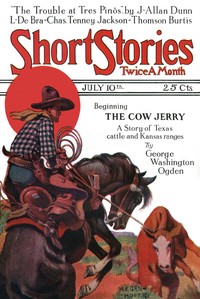
The catalog record for Moonlight and moonshine — Reading Notes provides practical reading context through 14,918 words, 1 hr 5 min estimated reading time, and 2 detected text sections.
The text analysis averages about 16.3 words per sentence, while the detected sections provide another way to judge how the source is divided.
Project Gutenberg metadata also associates the work with “Love stories,” connecting these edition facts with the source record’s subject description.
Explore this collection
These alternatives are selected using recorded categories and estimated reading time.
About 64 minutes
England London Nineteenth Century Fiction
14,533 recorded words. 1 minutes difference from this book's estimate.
View Gutenberg source #73249About 70 minutes
England London Nineteenth Century Fiction
15,890 recorded words. 5 minutes difference from this book's estimate.
View Gutenberg source #73708About 53 minutes
England London Nineteenth Century Fiction
12,121 recorded words. 12 minutes difference from this book's estimate.
View Gutenberg source #71816Search stored excerpts and compare books → Choose by your preferences →
Choices use stored catalog measurements. Estimates vary with reading speed. A shared category is a catalog label, not a claim that two books have the same argument or literary quality.
Search reads excerpt text stored with this catalog and links to its associated Gutenberg record. The connection is stored in the site database; this tool does not recheck that every excerpt is word-for-word identical to that external record. Excerpt search does not cover every chapter and does not verify historical publication dates.
Catalog snapshot checked: 2026-09-25. Coverage: 95 public books, 95 available source excerpts.
Read the complete public-domain text at its original source.
Read on Project GutenbergThe novel begins not with a crash or a gunfight but with Lieutenant George Arlington Hemingwood studying his mustache in a mirror. This small vanity—deciding whether to shave it off to encourage thicker growth—immediately establishes his character: a man who is content, unhurried, and mildly amused by his own concerns. The narrator tells us he is “the unluckiest flyer still above the ground,” yet Hemingwood wastes no thought on promotion lists or future prospects. Life as a pilot, even in beaverboard rooms with a leaky ceiling, suits him better than his family’s Beacon Hill bank. The opening pages thus set a tone of easygoing competence, which will be tested when a bullet hits his engine over the Kentucky mountains.
The first excerpt devotes several paragraphs to Hemingwood’s face and attitude before any plot action occurs. His “sparkling brown eyes” and “wide, good-humored mouth” are described as belonging to “a contented and cheery person.” This is not mere filler; the narrator uses the mirror scene to show that Hemingwood’s primary conflict is not with external enemies but with his own lack of ambition. He has flown from Long Island to Panama, survived countless forced landings, and yet remains unruffled. The detail that he “could not have told you where he stood on the promotion list” reinforces his detachment. Readers should note how this initial portrait sets up a character who must be jolted into caring—by a bullet, a forced landing, and a schoolteacher named Gail Morgan.
When Hemingwood lands in the moonshine country, the setting shifts from the cockpit to a world of “shadowed mountains” and “bloody legends.” The excerpts show that the landscape is not just a backdrop but an active force. After his forced landing, he observes that the mountains seem “doubly mysterious, even menacing” under moonlight, and the narrator notes they are “vibrant with some of the passion and untamable wildness of the people whom they sheltered.” This personification of the terrain echoes the novel’s title: moonlight suggests romance, moonshine suggests lawlessness. The pilot’s initial indifference—“didn’t care what those Kentucky mountaineers did so long as they didn’t do it to him”—gives way to a grudging respect for the dangers of the hollows.
The developing relationship between Hemingwood and Gail Morgan is handled through understated gestures and dialogue. Gail is introduced as a college graduate recovering from “hectic college years,” teaching in a mountain school. Their conversations are casual, with an “undercurrent of friendly understanding.” A key moment occurs when Hemingwood tries to kiss her; she slips away, laughing, and says, “We’re getting along wonderfully, but not that well.” This refusal is playful but firm, establishing her as someone who sets boundaries. Later, when he flies over her schoolhouse and “jazzed the throttle twice,” she waves her handkerchief. The romance proceeds through small signals—a chuckle, a parting smile, a wave—rather than declarations, which suits the novel’s light tone.
A striking detail emerges when Gail reveals that the local bootlegger, Ballardson, is also the peace officer. Hemingwood’s reaction—“So the prominent bootlegger is peace officer, eh? That’s what I call a real tight corporation”—shows his amused acceptance of the mountain’s moral flexibility. The narrator earlier notes that an army man is safer than other strangers “except under unusual provocation,” suggesting that the rule of law is fragile here. This tension between military order and local custom is likely to drive the plot, though the excerpts do not reveal how it resolves. Readers should watch for how Hemingwood’s easygoing nature adapts to a place where the lawman makes moonshine.
These excerpts offer a clear sense of the novel’s texture: a lighthearted hero, a setting that blends menace with beauty, and a romance built on mutual respect. The story moves from the intimacy of a shaving mirror to the open sky above the Kentucky hills, and from there to a moonlit road where a kiss is refused but not rejected. Readers who enjoy early twentieth-century adventure-romance will find a competent, unpretentious example here, one that trusts its characters and setting rather than relying on melodrama.
This shaving mirror moment in Burtis’s pilot—that quiet contentment before trouble—reminded me of a gray afternoon when I reread The House of Egremont — Reading Notes. Both stories carry that same hush of a man at ease in his own skin, before the landscape shifts. I closed the book and just sat with that feeling, the way one lingers over a familiar photograph.
Answer a few questions and save a private reflection on this device.









