About 296 minutes
The nameless man — Edition Insights
England London Nineteenth Century Fiction
67,927 recorded words. 0 minutes difference from this book's estimate.
View Gutenberg source #68810
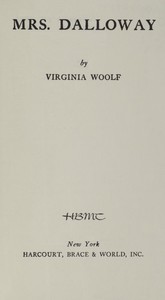
For Mrs. Dalloway — A Closer Reading, the stored edition analysis reports 68,024 words, 4 hr 56 min estimated reading time, and 10 detected text sections.
The text analysis averages about 18.1 words per sentence, while the detected sections provide another way to judge how the source is divided.
Project Gutenberg metadata also associates the work with “London (England) -- Fiction,” connecting these edition facts with the source record’s subject description.
Explore this collection
These alternatives are selected using recorded categories and estimated reading time.
About 296 minutes
England London Nineteenth Century Fiction
67,927 recorded words. 0 minutes difference from this book's estimate.
View Gutenberg source #68810About 295 minutes
England London Nineteenth Century Fiction
67,809 recorded words. 1 minutes difference from this book's estimate.
View Gutenberg source #71564About 290 minutes
England London Nineteenth Century Fiction
66,547 recorded words. 6 minutes difference from this book's estimate.
View Gutenberg source #70175Search stored excerpts and compare books → Choose by your preferences →
Choices use stored catalog measurements. Estimates vary with reading speed. A shared category is a catalog label, not a claim that two books have the same argument or literary quality.
Search reads excerpt text stored with this catalog and links to its associated Gutenberg record. The connection is stored in the site database; this tool does not recheck that every excerpt is word-for-word identical to that external record. Excerpt search does not cover every chapter and does not verify historical publication dates.
Catalog snapshot checked: 2026-09-25. Coverage: 95 public books, 95 available source excerpts.
Read the complete public-domain text at its original source.
Read on Project GutenbergMrs. Dalloway opens with a simple errand—Clarissa will buy the flowers herself—but the sentence immediately expands into a sensory plunge: the fresh morning, the squeak of hinges, the memory of Bourton. Woolf’s prose moves between external detail and internal reflection, so that a van crossing Victoria Street becomes a moment of suspended time. The catalog subjects list “married women” and “suicide victims,” yet the first pages dwell less on plot than on the quality of perception—how a woman over fifty, “grown very white since her illness,” can still feel “like the flap of a wave.”
The excerpts cover only a few hours, yet they accumulate a dense network of sensory and social detail. Big Ben booms, “first a warning, musical; then the hour, irrevocable,” and the phrase “leaden circles dissolved in the air” gives time a physical weight. Clarissa’s thoughts weave between present and past: the memory of Peter Walsh saying “Musing among the vegetables?” surfaces unbidden, a fragment that outlasts “millions of things” that have vanished. Woolf’s narrative voice does not summarize; it drifts, pauses, and loops, so that a character’s walk to buy flowers becomes a meditation on aging, class, and the persistence of certain words.
The lunch at Lady Bruton’s is described as a “soundless and exquisite passing to and fro” of maids, creating a “profound illusion” that food appears unpaid for and tables arrange themselves. The prose exposes the labor behind upper-class hospitality while maintaining a tone of ironic admiration. Hugh Whitbread, who “brushes surfaces” and “does not go deeply,” is rendered with a mixture of mockery and respect: his reforms (public shelters, protection of owls) are modest, yet his name on letters to the Times “commanded respect.” Lady Bruton herself prefers Richard Dalloway, “made of much finer material,” but dismisses the habit of “cutting people up, as Clarissa Dalloway did.” These passages show how social performance—the carnations, the inquiries after a secretary’s brother—carries unspoken resentments and hierarchies.
The catalog subjects include “Triangles (Interpersonal relations)” and “Suicide victims,” but the excerpts do not yet introduce any love triangle or suicide. Instead, they foreground a different kind of tension: the gap between what characters think and what they say. Clarissa “stiffened a little on the kerb,” and Scrope Purvis sees her as “a touch of the bird about her,” yet she does not notice him. Hugh Whitbread’s rumination on Rigby and Lowndes’s clock reveals a mind that “did not go deeply.” The narrative voice itself enacts a form of cutting and reassembling—moving from Clarissa’s consciousness to Hugh’s to Lady Bruton’s—without resolving their differences. Readers attentive to these shifts will find that the novel’s drama lies less in events than in the texture of awareness itself.
Because the excerpts cover only the opening and a middle sequence, the novel’s later developments—including the suicide mentioned in the catalog—remain absent from this record. What is visible is a prose style that treats every gesture, every memory, as worthy of patient attention. Readers may find it useful to track how Woolf signals shifts between characters’ minds, and to notice where the narrative lingers on objects or sounds that seem incidental but later echo.
Reading Mrs. Dalloway again, I kept noticing how the city’s quiet rhythms mirror the characters’ inner weather. It reminded me of something else I once read, where the landscape itself seemed to hold secrets. There’s a similar ache in that wide, open country, a feeling of memory pressed into the soil. The riddle of the rangeland — Background and Themes lingers the way her party does, all these small choices weighing more than they should.
Capture what you thought, learned, and would like to remember.









