About 694 minutes
Doctor Hathern's daughters — Reading Companion
England London Nineteenth Century Fiction
159,597 recorded words. 57 minutes difference from this book's estimate.
View Gutenberg source #70883
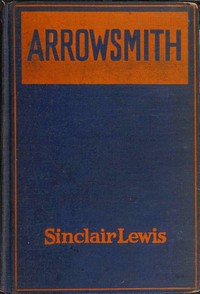
Before opening Arrowsmith — Background and Themes, the edition data offers a quick orientation: 172,616 words, 12 hr 31 min estimated reading time, and 17 detected text sections.
The text analysis averages about 18.1 words per sentence, while the detected sections provide another way to judge how the source is divided.
Project Gutenberg metadata also associates the work with “Satire,” connecting these edition facts with the source record’s subject description.
Explore this collection
These alternatives are selected using recorded categories and estimated reading time.
About 694 minutes
England London Nineteenth Century Fiction
159,597 recorded words. 57 minutes difference from this book's estimate.
View Gutenberg source #70883About 693 minutes
England London Nineteenth Century Fiction
159,244 recorded words. 58 minutes difference from this book's estimate.
View Gutenberg source #71284About 666 minutes
England London Nineteenth Century Fiction
152,979 recorded words. 85 minutes difference from this book's estimate.
View Gutenberg source #73165Search stored excerpts and compare books → Choose by your preferences →
Choices use stored catalog measurements. Estimates vary with reading speed. A shared category is a catalog label, not a claim that two books have the same argument or literary quality.
Search reads excerpt text stored with this catalog and links to its associated Gutenberg record. The connection is stored in the site database; this tool does not recheck that every excerpt is word-for-word identical to that external record. Excerpt search does not cover every chapter and does not verify historical publication dates.
Catalog snapshot checked: 2026-09-25. Coverage: 95 public books, 95 available source excerpts.
Read the complete public-domain text at its original source.
Read on Project GutenbergThe novel opens with a stark frontier vignette: a fourteen-year-old girl driving a wagon through the Ohio wilderness, burying her mother, tending a feverish father, and declaring, “We’re going on jus’ long as we can. Going West!” This is the great-grandmother of Martin Arrowsmith, and the scene establishes a pattern of restless ambition that will echo through generations. Sinclair Lewis then jumps to 1897, introducing Martin as a boy reading “Gray’s Anatomy” in a barber-chair-turned-examining-chair, the property of a scruffy small-town doctor. The contrast between the epic pioneer spirit and the dowdy, comic reality of Elk Mills sets the tone for a narrative that constantly shifts between earnest scientific aspiration and satirical deflation.
Lewis’s narrator maintains a cool, ironic detachment that undercuts both heroism and villainy. When describing Almus Pickerbaugh, the health officer who invokes Pasteur and George Washington while flattering Rotary Club businessmen, the narrator notes that Pickerbaugh made it clear “they were his masters and lords of all the land, and fatly, behind cigars, they accepted their kinghood.” The word “fatly” does double duty: it describes their physical posture and their complacent authority. Similarly, Martin’s internal rebellion—his “gospel of not bawling gospels, the wisdom of admitting the probable ignorance of one’s self and of everybody else”—is undercut by the narrator’s own ironic framing of it as a “Movement for going very slow.” The voice never fully endorses Martin’s ideals, keeping the reader at a skeptical distance.
The excerpts reveal a deliberate alternation between focused scientific work and chaotic interruption. In one passage, Martin is “summoned into the reception-room” to explain gasoline smells, then dictates letters, drives to Swede Hollow, orders a quarantine, and “escaped at last into the laboratory.” The sentence structure itself mimics the fragmentation: a list of tasks separated by semicolons, building to the verb “escaped.” Later, the Pickerbaugh daughters “popping into” the laboratory break test-tubes and make doll tents from filter paper, while Orchid’s humming and ankle-curling distract Martin from his hemolyzed blood sample. Lewis uses these interruptions to dramatize the tension between research and the demands of public health bureaucracy, domestic life, and temptation. The pace quickens and slows with Martin’s ability to concentrate.
The laboratory appears repeatedly as a space of potential focus that is constantly invaded. In the excerpts, it is “well lighted, convenient, well stocked,” but Martin has “little time for anything but cultures, blood-tests, and Wassermanns.” The lab is also where Orchid works on posters, humming and talking “tremendously,” and where Martin holds a “clear, claret-red tube of hemolyzed blood up to the light” while thinking of her ankles. The color and precision of the scientific detail contrast with the vague, sensual distraction. Earlier, the boy Martin reads “Gray’s Anatomy” in Doc Vickerson’s office, a space that is part barbershop, part operating room, part nap parlor. The lab is never purely scientific; it is always also a stage for human weakness, comedy, and the mess of daily life.
Readers attentive to Lewis’s shifts in tempo will notice how the novel’s long sentences and catalogues of bureaucratic tasks give way to taut, almost cinematic scenes of temptation or discovery. The frontier opening, with its raw determination, is never entirely left behind; it resurfaces in Martin’s stubbornness and in the novel’s recurring image of a person alone with a book or a test tube. The satire is sharp but not cruel—Lewis seems genuinely interested in the difficulty of doing good work in a world full of Pickerbaughs.
There’s a particular ache in Arrowsmith, that tension between what he dreams of doing and what the world lets him do. It made me think of gentler, earlier Lewis, where the longing is lighter, almost playful. I found myself returning to the quiet nostalgia of The scarlet car; The Princess Aline — Edition Insights, a reminder that even restless hearts begin as romantics.
Use these questions to collect your thoughts before moving on.









